Editor's Picks
Images and insights from Ezra Barnea’s journey to Cyprus’s...
Ezra Barnea
|
Jun 13, 2026
Endangered oak Quercus hinckleyi shows strong genetic...
Website Editor
|
Jun 09, 2026
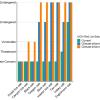
New paper should significantly change our approach to...
Steve Potter
|
Jun 09, 2026
Plant Focus
Roderick Cameron and Carlos Vila-Viçosa give an account of this intriguing species from northwestern Iberia with a complex taxonomic and...
Named in honor of one of America’s first botanists, John Bartram, Quercus ×heterophylla is known by many as Bartram’s oak. This interesting hybrid can be found in the US where the parent species of Q. rubra and Q. phellos overlap (essentially most of the midwestern to southeastern states) and in collections. This hybrid can also be found in Europe in arboreta and private collections. One of the largest European specimens stands in the Garden Kingdom of Dessau-Wörlitz, Germany. It measures over 15 ft in circumference and is 65 ft tall. A noteworthy specimen in the US is located in Philadelphia, Pennsylvania and has nearly identical dimensions of the grand European tree (16 ft circumference, 61 ft tall). This tree is believed to be a direct descendant of a Q. ×heterophylla grown by John Bartram on his property.


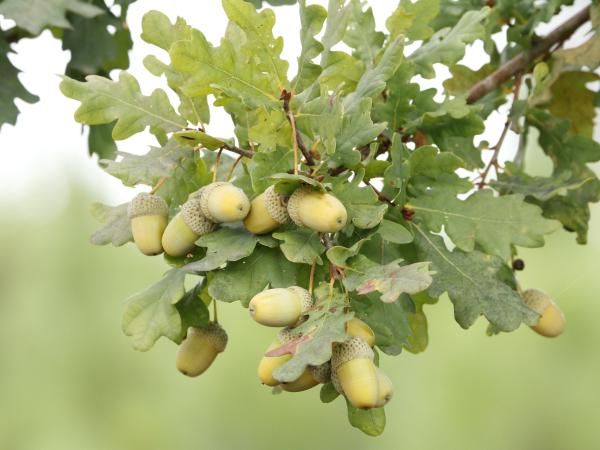
This is an attractive hybrid typically characterized by long, slender leaves with 6-8 shallow lobes. Acorns are typically small (3/8 to 1/2 inch diameter) with shallow, flattened cups. The acorns are usually light to medium brown with dark striations. Seedling trees will vary of course, some having larger leaves or lager acorns. This hybrid makes a pleasing street tree and there exists a great opportunity to make superior selections.


Content by the Same Author
The International Oak Society acknowledges the generous support of the following institutions:
Supporting Institutional Members



Standard Institutional Members