Editor's Picks

While working on a list of synonyms of European White...
Roderick Cameron
|
Aug 24, 2026
Report led by The Morton Arboretum will help prioritize oak...
Website Editor
|
Aug 06, 2026
Motivation
I live in the village of Dolné Dubové...
Jozef Čapkovič
|
Jul 20, 2026
Plant Focus
The only oak species endemic to Africa is rare in cultivation. It shouldn't be.
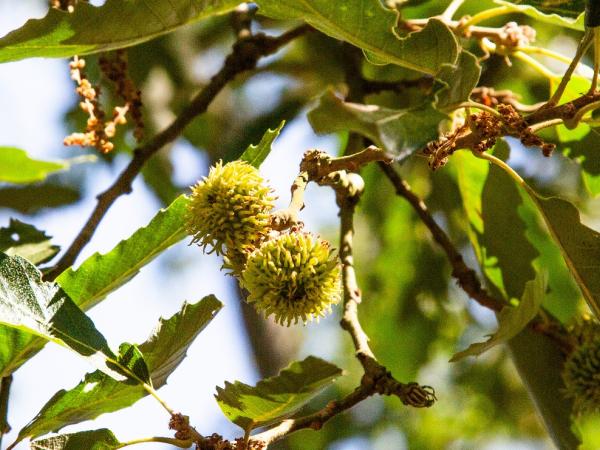
Quercus suber is a species native to acidic soils and warm climates of the western Mediterranean. In Catalonia, an autonomous community in northeastern Spain, it is known locally as surera or suro in Catalan. Like other oaks, it is not exempt from hybridizing with relatives encountered throughout its distribution. Though hybridization in Quercus occurs usually between species of the same section, Q. suber, which is in section Cerris of subgenus Cerris, is known to hybridize often with species in other sections, even with species of section Quercus in subgenus Quercus. In Catalonia, it hybridizes with species in section Ilex, mainly Q. ilex, giving rise to Q. ×morisii. It can also hybridize with Q. rotundifolia (producing Q. ×avellaniformis) and with Q. coccifera (resulting in Q. ×coscojosuberiformis). This group of hybrids is known in Catalan as surolins (singular surolí).1
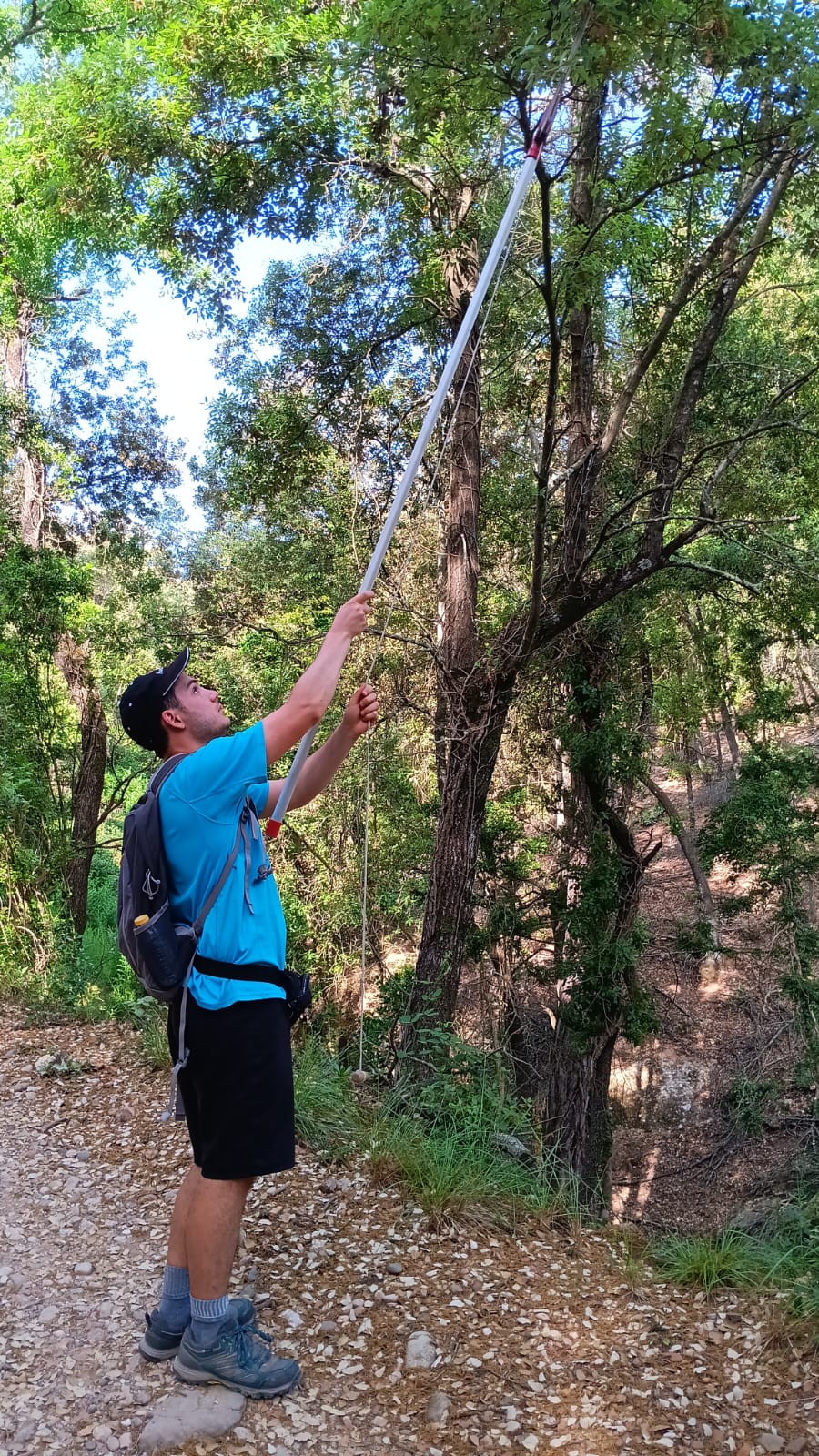
Since childhood, I have always loved nature. At 14, I discovered the world of the genus Quercus, though it wasn’t until I was 18 that I found my first surolins and fell in love with them. At that moment, I decided I wanted to learn more about these hybrids and began researching them. In August 2024, I created the citizen science project on iNaturalist “Surolins de Catalunya”, along with its corresponding Instagram page, dedicated to learning more about these hybrids but, above all, to raising awareness of trees unknown to most.
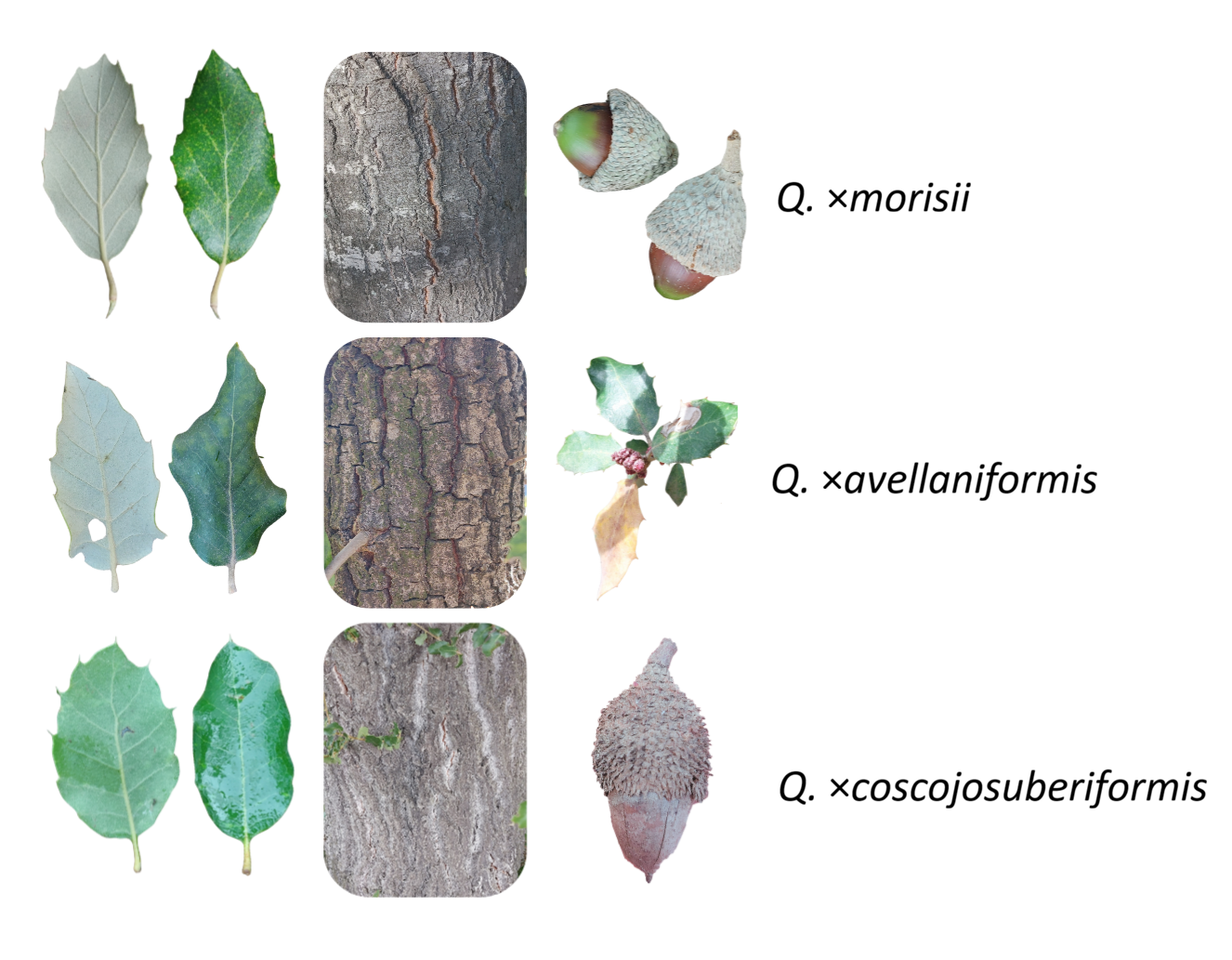
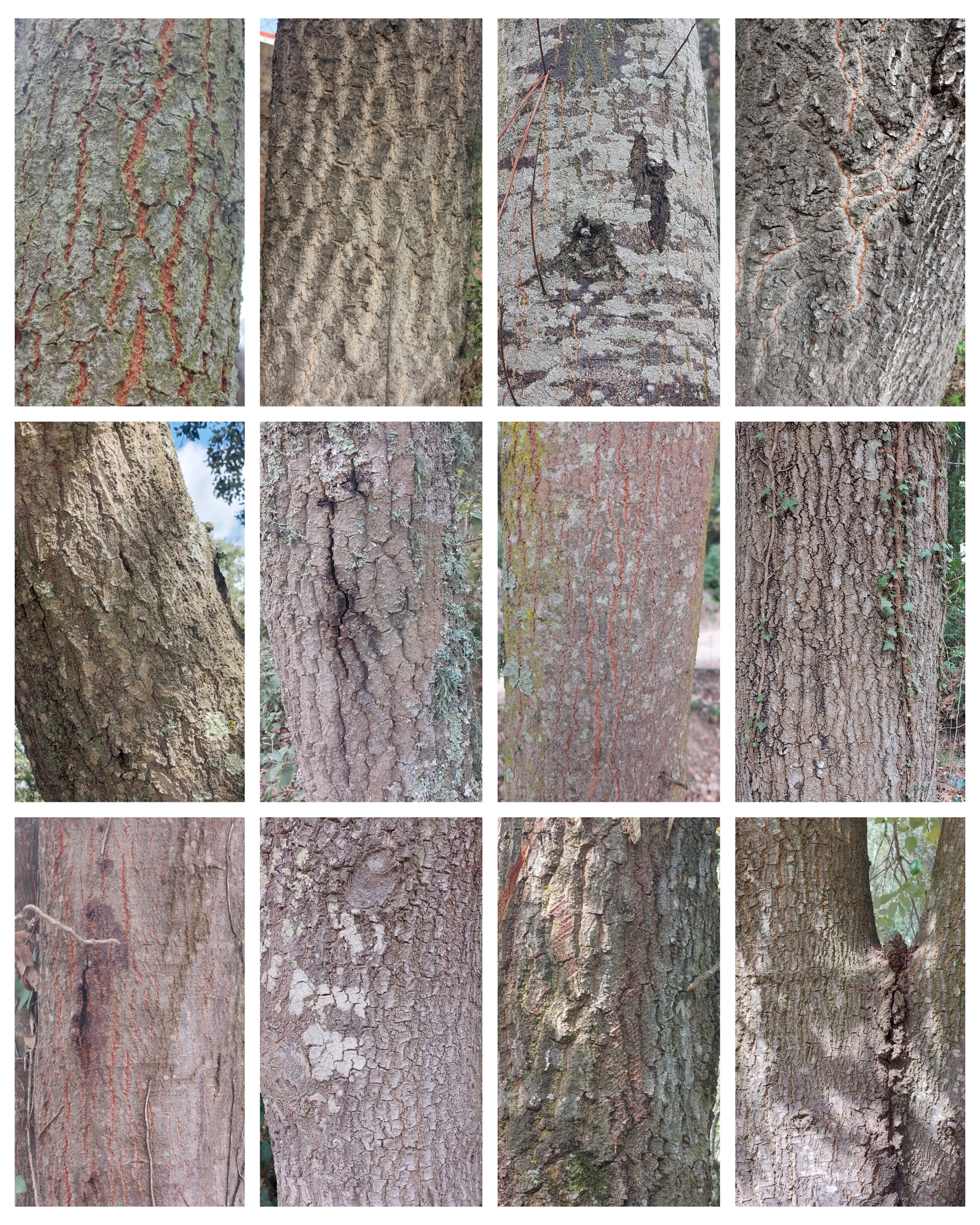
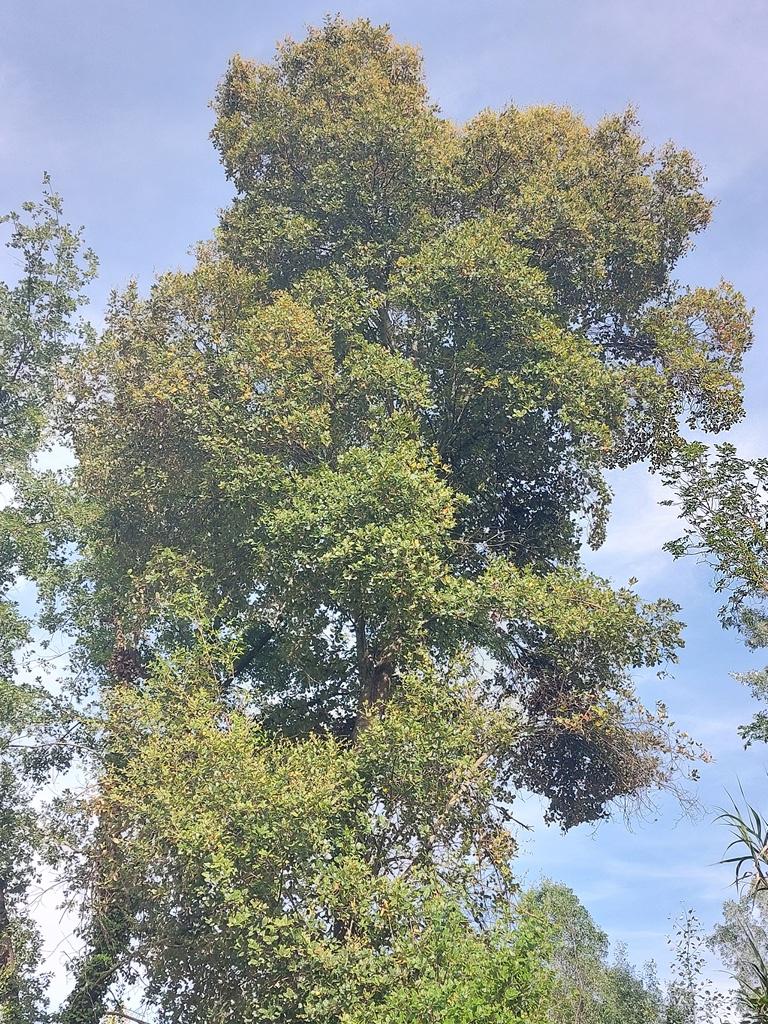
Regarding the characteristics of these hybrids, it can be said that Q. ×morisii and Q. ×avellaniformis are difficult to distinguish morphologically. Both have leaves very similar to Q. suber, with a bright, clean, white underside and mucronate margins (with teeth ending abruptly in a short, sharp point). The acorn cup has protruding scales, but much shorter than in Q. suber. Quercus ×coscojosuberiformis, however, has leaves intermediate between its two parents, but with mucrons that are not sharp. The underside is almost glabrous, and the acorn cup is very similar to Q. coccifera but with non-prickly scales. All three hybrids share a generally more upright growth than their parents. In addition, in April or May they lose a large amount of foliage, turning yellow before flowering. The bark, in all three hybrids, is highly variable, though generally showing vertical fissures.
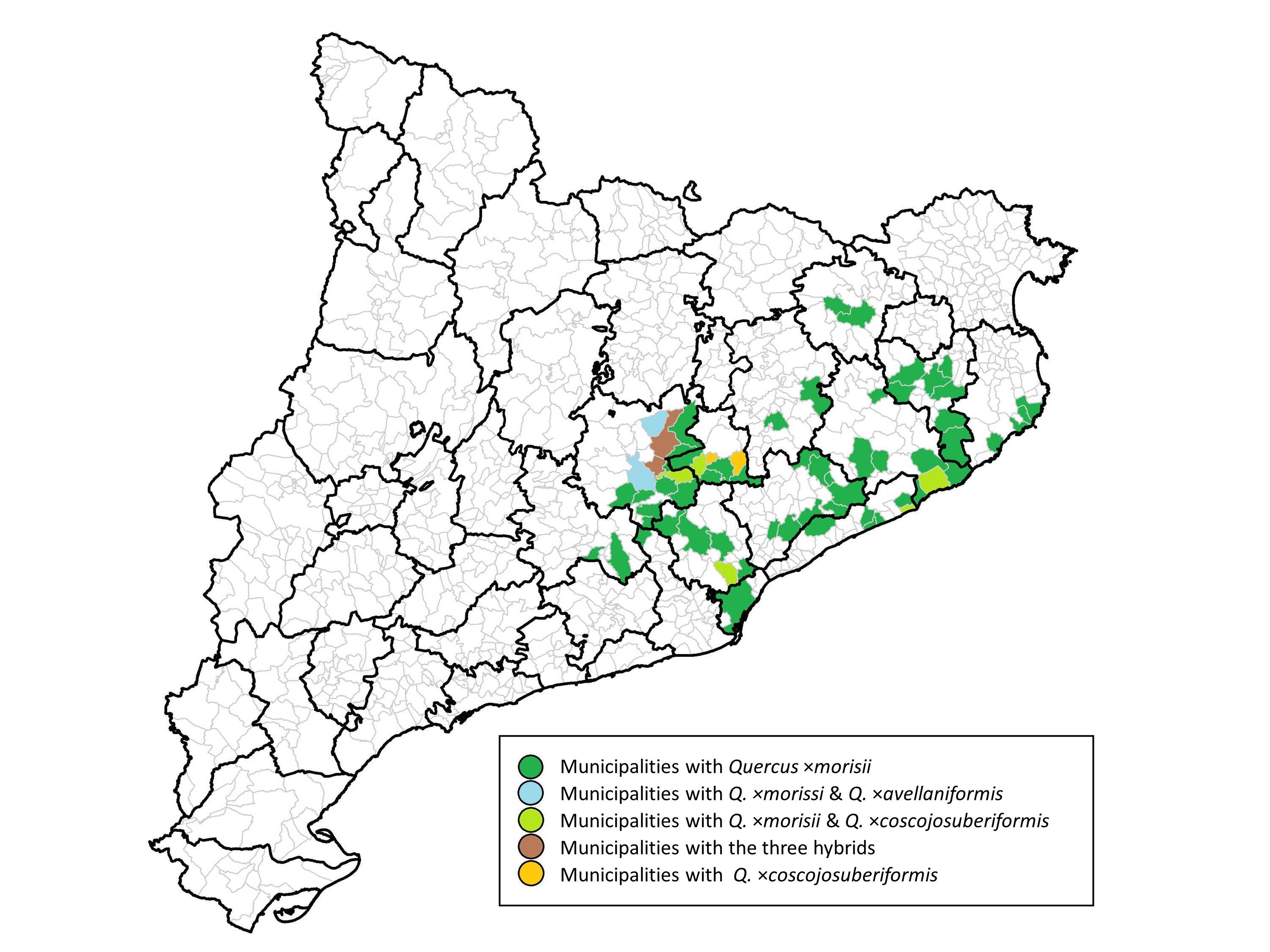
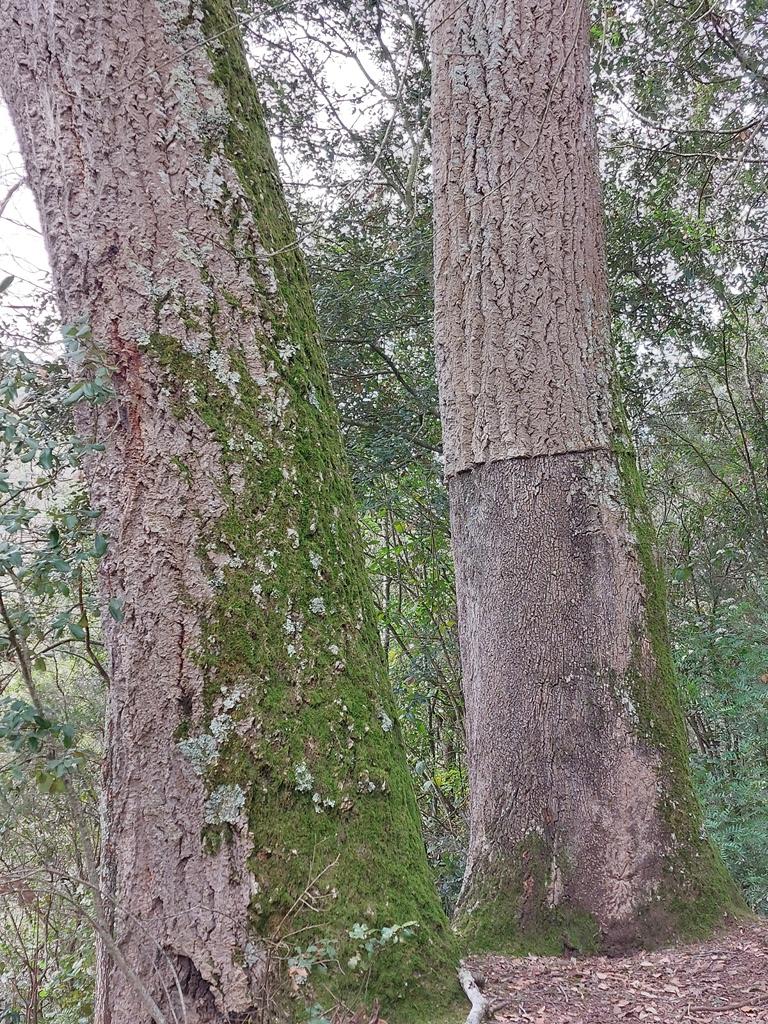
In Catalonia, 245 surolins have been recorded on iNaturalist, spread across 66 municipalities in 13 comarcas (counties). Quercus ×morisii is undoubtedly the most abundant of the three hybrids, with 223 specimens recorded. In contrast, only 13 Q. ×avellaniformis and 9 Q. ×coscojosuberiformis have been detected. The municipality with the most specimens recorded is Llagostera (Girona), with 23. The comarca with the most specimens recorded is Bages (Barcelona), with 45, which is surprising, since it is a limestone area with hardly any cork oaks. This suggests that the hybrids discussed in this article can also grow in carbonate soils and not only in mixed stands of Q. suber, as previously thought. As for cultivated specimens, only Q. ×morisii has been found, mixed among Q. ilex as urban trees or in reforestation. The largest specimen of this group of hybrids is known as the Surolí de Cal Músic, in the comarca of La Selva (Girona). It is a monumental Q. ×morisii with two enormous trunks.
Under the umbrella of the association Voluntàries Mediambientals de Sant Joan de Vilatorrada (Barcelona), we have planted three seedlings of Q. ×morisii and one of Q. ×coscojosuberiformis in an urban forest project with the municipality’s council, to help conserve these impressive and interesting hybrids. In addition, some of these hybrids will be planted as street trees. Collaboration has also taken place with the association El Meandre de Manresa (Barcelona), planting one Q. ×morisii and one Q. ×coscojosuberiformis on land in the same municipality. Finally, 40 specimens of Q. ×morisii from the siliceous soils of Girona have been grown to be donated to a conservationist association in the province.
To conclude, there is still a long way to go in terms of knowledge, outreach, and conservation of these three hybrids known as surolins. As long as I can, I will continue studying them and making them known, preventing them from falling into oblivion.
1 The origin of the word is unclear: it could be a diminutive of suro, but it is also said to be formed from the combination of suro (Q. suber) and aulí (Q. ilex); aulí derives from aulina, in turn derived from alzina, the common name for Q. ilex in Catalan, which can be traced back to the Vulgar Latin ilicina, from arbore ilicina (“the Ilex tree”). The ending –ns is a standard plural ending in Catalan for words ending in a stressed vowel.
The International Oak Society acknowledges the generous support of the following institutions:
Supporting Institutional Members



Standard Institutional Members