Editor's Picks
Images and insights from Ezra Barnea’s journey to Cyprus’s...
Ezra Barnea
|
Jun 13, 2026
Endangered oak Quercus hinckleyi shows strong genetic...
Website Editor
|
Jun 09, 2026
New paper should significantly change our approach to...
Steve Potter
|
Jun 09, 2026
Plant Focus
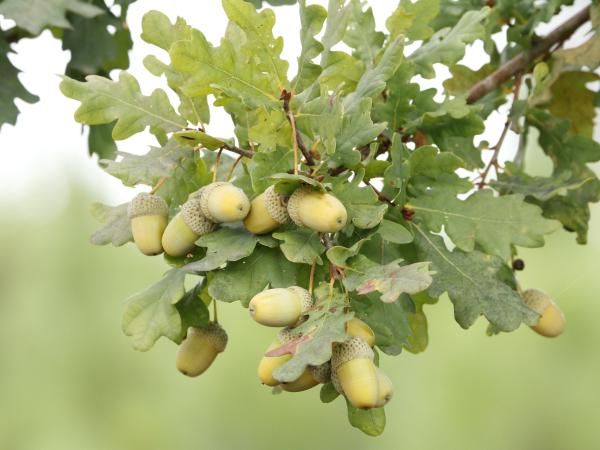
Roderick Cameron and Carlos Vila-Viçosa give an account of this intriguing species from northwestern Iberia with a complex taxonomic and...
 ArbNet is an interactive community of arboreta, sponsored and coordinated by The Morton Arboretum in cooperation with the American Public Gardens Association and Botanic Gardens Conservation International. Its Arboretum Accreditation Program recognizes arboreta at various levels of development and capacity, based on an arboretum’s collections and curation, education and public programming, scientific research and conservation initiatives, governance, and staff or volunteer support.
The network was created to facilitate the sharing of knowledge, experience, and other resources to help arboreta meet their institutional goals and to help raise professional standards. Through ArbNet, arboreta from around the globe can work collaboratively as part of a broad network to help advance the planting and conservation of trees. The accreditation program offers four levels of accreditation, recognizing arboreta of various degrees of development, capacity, and professionalism. Accreditation is based on self-assessment and documentation of an arboretum’s level of achievement of accreditation standards. Standards include planning, governance, labeling of species, staff or volunteer support, public access and programming, tree science, planting, and conservation. These standards, and indeed the entire concept of ArbNet (which includes the registry, the website, and the accreditation program), were established to overcome the lack of definitions, guidelines, and an identifiable network specifically geared to arboreta.

The program provides guidance based on best practices, as well as tools to help organizations pursue and achieve accreditation. Any arboretum or other types of public gardens with a substantial focus on woody plants is eligible to apply for accreditation through the program. Examples of institutions that can qualify include botanical gardens, cemeteries, zoos, city tree collections, historic properties, college campuses, corporate campuses, nursing homes, nature reserves, and municipal parks.
Another driving force behind ArbNet, for the good of the overall arboreta community, is for the larger, well-resourced arboreta to provide guidelines, models, expertise, and inspiration for smaller arboreta, so that the entire network is stronger, more connected, and together is advancing the quality and capacity of tree-focused gardens. It is for that reason that it is so important to have large gardens as part of the accreditation program, so that they can provide leadership and guidance to the broader community. ArbNet uses many of the programs, documents (e.g., collections policies), and publications of level III and IV arboreta as resources for smaller arboreta to adopt and learn from. It is a valuable way for a higher level arboretum to exert leadership and influence.
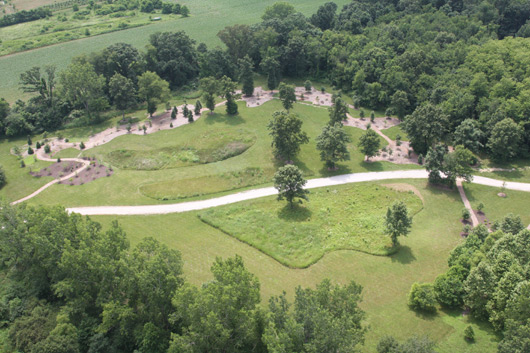
Among its achievements in its first six years, ArbNet has built capacity for smaller gardens and non-traditional arboreta like cemeteries, municipalities, and retirement communities. These organizations are tapping into audiences that traditional gardens don’t always readily access, broadening public awareness of the importance of trees and increasing the quality of curation of living tree collections.
The strength of the ArbNet network is its diversity – from major leading arboreta to lesser known but earnest gardens. By sharing perspectives and experiences, the network aims to build capacity, collaboration, and best practices for tree-focused gardens around the world.
As of July 2017, ArbNet has accredited 186 arboreta in 13 countries, including 19 arboreta with strong connections to IOS members (see a list of them here). If you have a documented collection of oaks or other plants, you should consider applying—it’s free!
More information is available at www.arbnet.org.
Content by the Same Author
The International Oak Society acknowledges the generous support of the following institutions:
Supporting Institutional Members



Standard Institutional Members