Editor's Picks
Images and insights from Ezra Barnea’s journey to Cyprus’s...
Ezra Barnea
|
Jun 13, 2026
Endangered oak Quercus hinckleyi shows strong genetic...
Website Editor
|
Jun 09, 2026
New paper should significantly change our approach to...
Steve Potter
|
Jun 09, 2026
Plant Focus
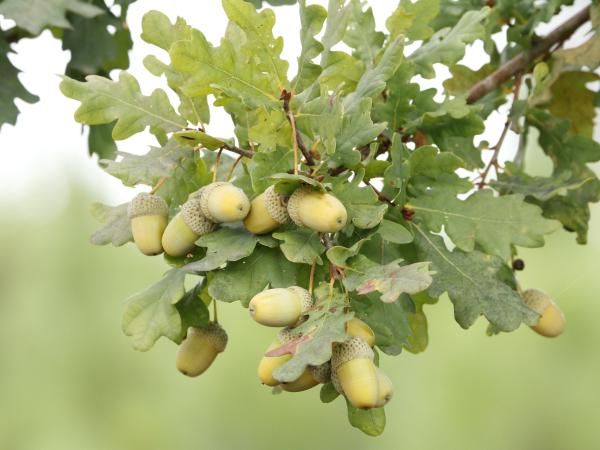
Roderick Cameron and Carlos Vila-Viçosa give an account of this intriguing species from northwestern Iberia with a complex taxonomic and...
Sunday, 6th of July 2014 - The one and a half Oak Open Days started with a lunch hosted by Christine and Ben Battle at Manor Farm in Upton Cheyney. About 38 people were present, including Congrove's new owner, Mr. Tam Gorst who would move in in just a few days. We found a handout on our chairs with a short history of the arboretum and a list of taxa that can be seen at the arboretum.
After lunch, we packed into a few cars and off we went to Congrove along a narrow country road that we followed until it ends, though a sheltered valley called Pipley Bottom. The small cottage is truly charming. Ben and Christine discovered here a derelict arboretum when they bought Congrove in 1998.
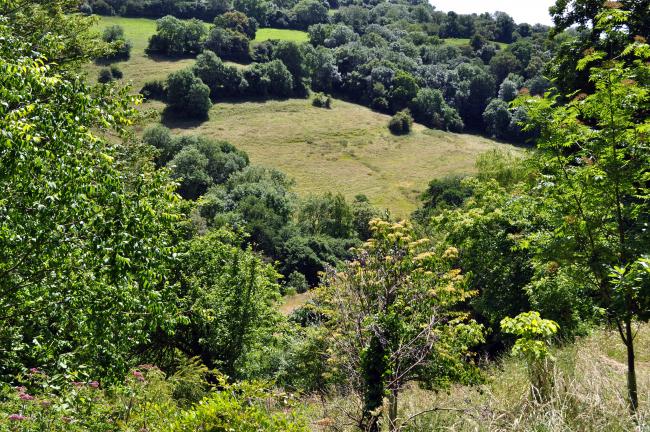 |
They also planted some 2,600 specimen trees over the years, including a collection of some 200 different oaks. Guided by James McEwen, we started on the steeper north (and therefore south-facing) slope of the valley and then walked down to the bottom along the Pipley brook.
It is not my intention to list all the trees in the collection. And a more detailed account of our visit to Congrove will be published in International Oaks. However, I was surprised to find a sheltered spot in the arboretum where Quercus insignis, Q. corrugata and Q. germana have been growing for two full seasons and survived two winters, even if they were quite mild winters (one of the attendees said that three or four days every ten years really determine what is hardy in a garden).
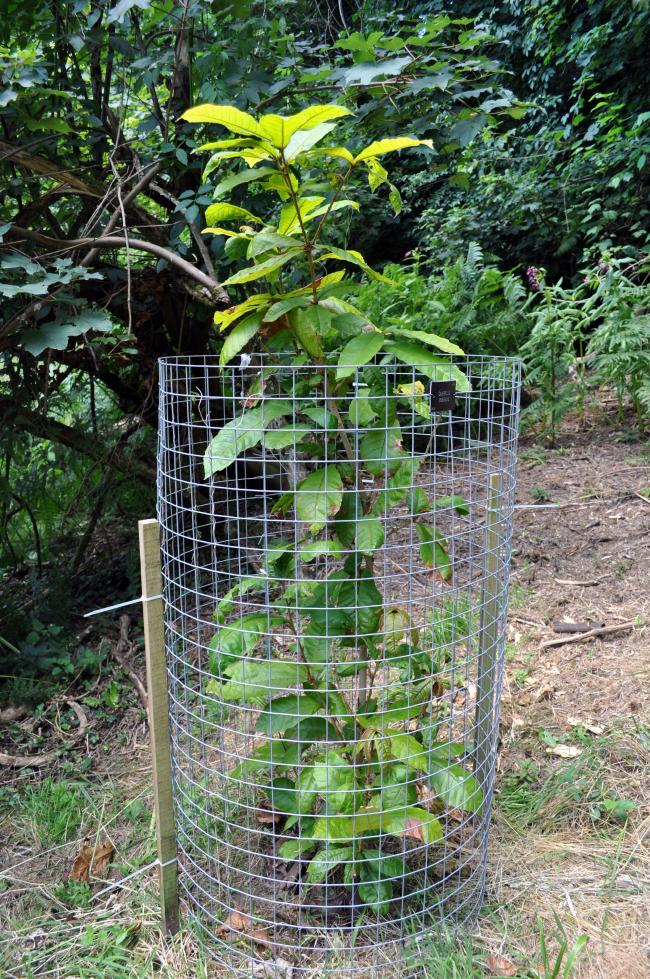 |
| Quercus insignis, 2264, planted out in 2012, Congrove |
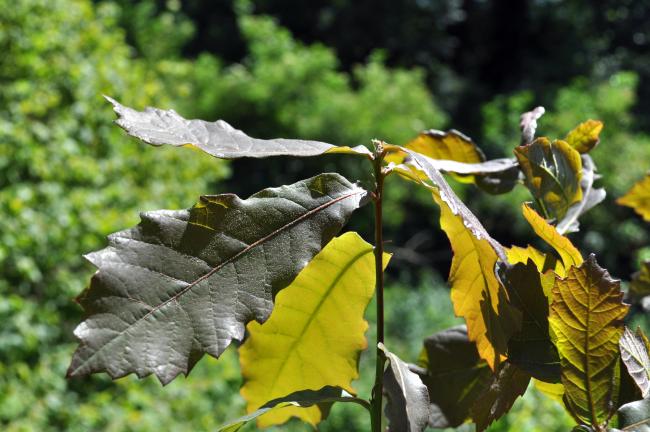 |
| Quercus germana, 2147 (2011), Congrove |
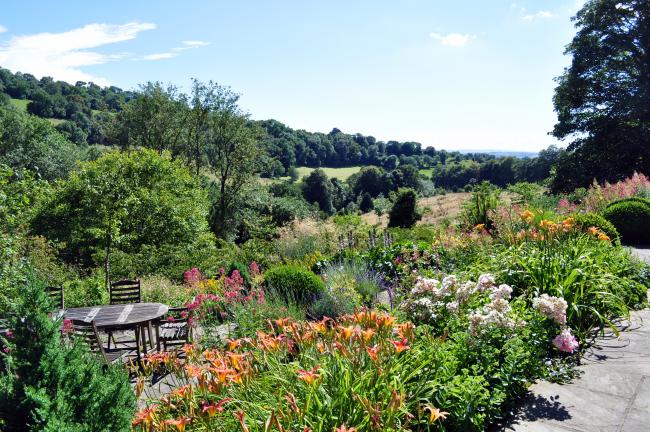
Congrove is really bewitching: just about enough land to plant a good number of trees, a lovely cottage, a stream, and the feeling that you are on the other side of the looking glass.
 |
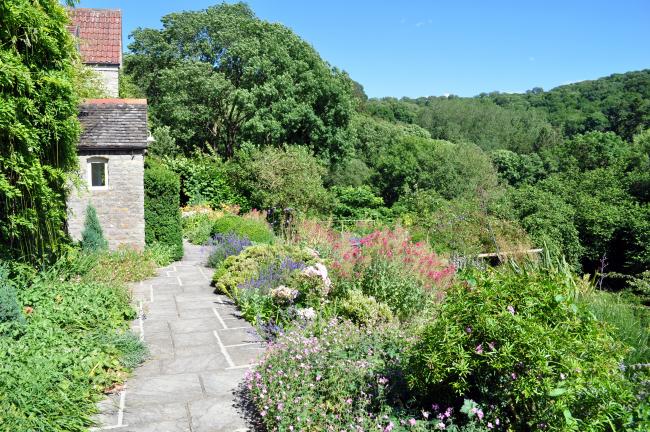 |
| Views of Congrove Cottage |
After tea at Manor Farm, we drove to Leigh Delamere where we visited Harriet Tupper’s garden.
Monday, 7th July 2014 – We met at 10am at the new visitor center at Westonbirt.
The group was smaller that day: 21 attendees, including Westonbirt staff.
Nearly 15,000 labeled woody plants, 2,500 taxa, 600 acres (270 hectares) says their website, actively managed by the Forestry Commission. Westonbirt has always been a reference for me. Indeed, in 1991, my mother and her sisters sold an arboretum founded by my grandfather in Southern Belgium to the Walloon Region and it fell under the responsibility of the Belgian equivalent of the Forestry Commission. When I visited Westonbirt for the first time nearly 20 years ago, I thought this was to be the reference for the management of my grandfather's collection set in the forests of the Ardenne. Over the years, however, the Walloon administration did not prove as able as the Forestry Commission.
We were welcomed by Simon Toomer, director of the arboretum. We were guided by Dan Crowley, newly appointed dendrologist of Westonbirt, and Hugh Angus, who worked here too until his retirement. Simon and Dan are members of the International Oak Society (and hopefully Hugh will eventually become one: there are other things in life than maples).
Westonbirt holds national collections of Acer, Acer palmatum cultivars, Staphylea, Tilia, and the Juglandaceae. It used to have a national collection of Salix that has been abandoned.
We started by visiting Silk Wood until lunchtime, where a small oak collection is located. We saw there an old tall Q. canariensis, as well as a young plant from wild origin.
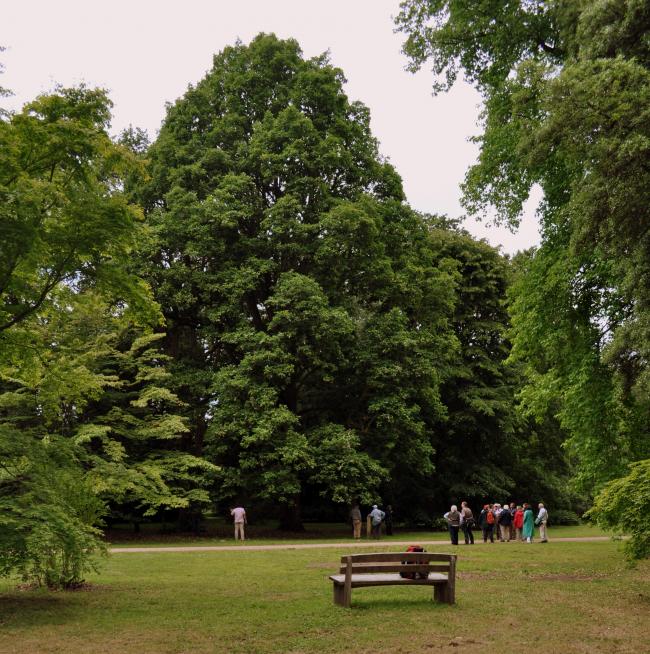 |
| Quercus canariensis, 43.0446, Silk Wood |
Dan showed us a number of unidentified Quercus in Silk Wood that we were able to identify, mostly thanks to Eike Jablonski. We also came across a group of simple-leaved sorbus microspecies from Central Europe, Sorbus docica, Sorbus borbasii and Sorbus hajlinzskyana.
After lunch time, we visited the Old Arboretum in the rain where we saw some oaks younger than those seen in Silk Wood.
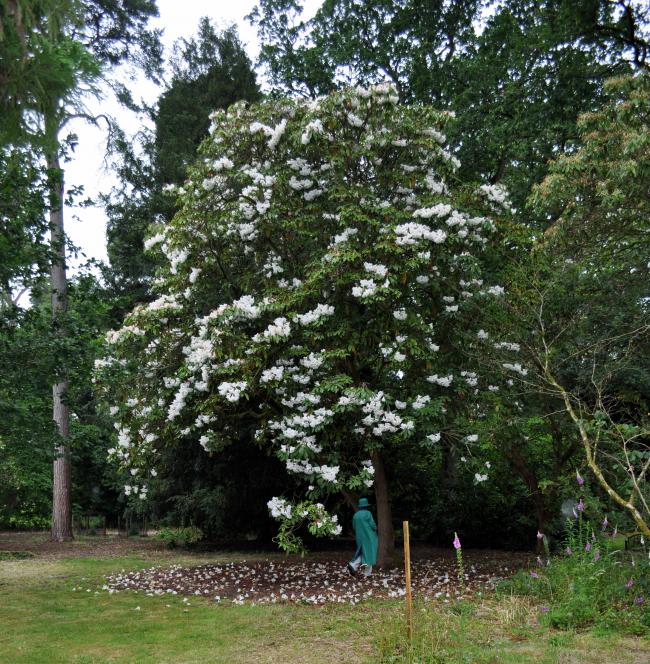 |
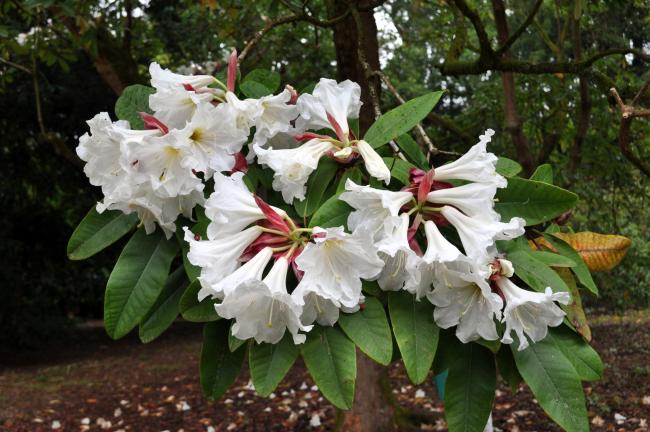
| Rhododendron 'Polar Bear', Old Arboretum |
 |
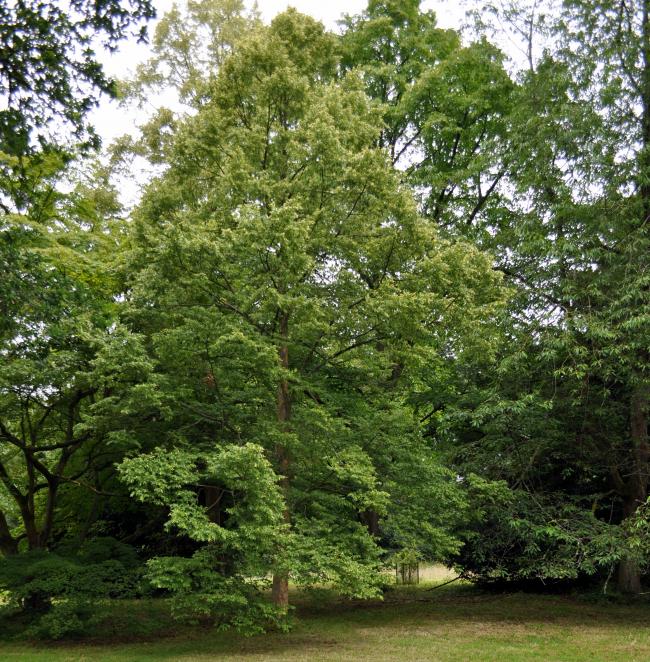
Later, we came across two plants that might not be featured in International Oaks: a good specimen of Chrysolepis chrysophylla and the UK champion Tilia kiusana, part of the national Tilia collection held by Westonbirt.
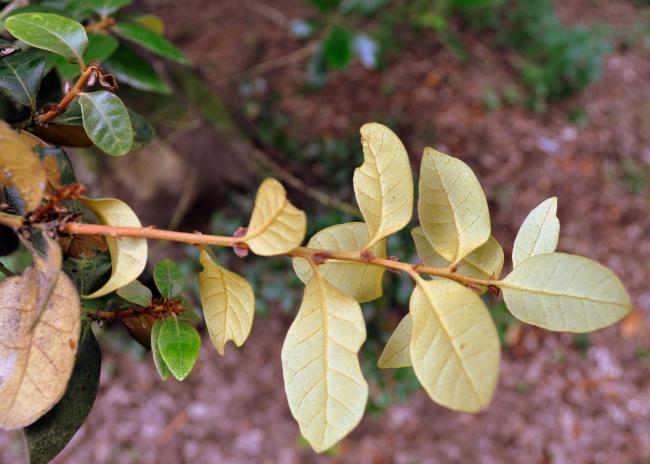 |
| Chrysolepis chrysophylla, 18.0071, Old Arboretum |
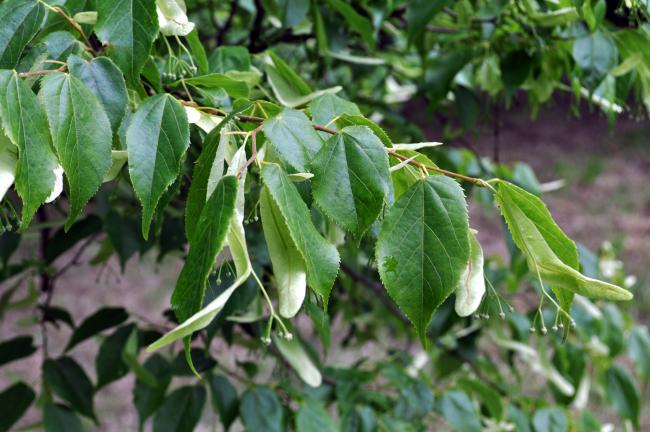 |
| Tilia kiusiana, UK Champion, Old Arboretum |
 |
Accounts of our visit to Congrove and Westonbirt will also appear in International Oaks, the Journal of the IOS, and Oaks News & Notes, the Society’s newsletter.
Content by the Same Author
The International Oak Society acknowledges the generous support of the following institutions:
Supporting Institutional Members



Standard Institutional Members