Editor's Picks

While working on a list of synonyms of European White...
Roderick Cameron
|
Aug 24, 2026
Report led by The Morton Arboretum will help prioritize oak...
Website Editor
|
Aug 06, 2026
Motivation
I live in the village of Dolné Dubové...
Jozef Čapkovič
|
Jul 20, 2026
Plant Focus
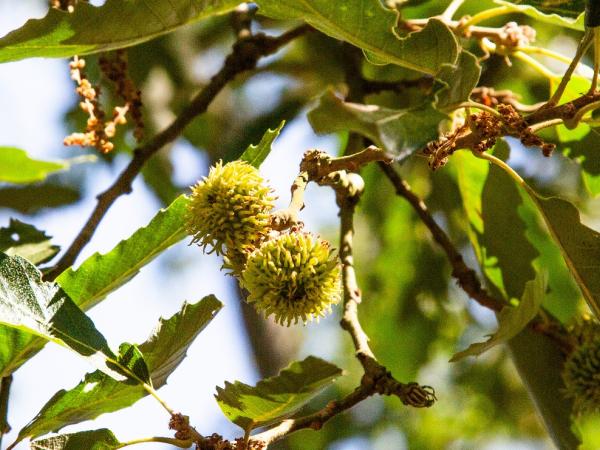
The only oak species endemic to Africa is rare in cultivation. It shouldn't be.
In July 2014 I visited Ardnamurchan on the west coast of Scotland. Ardnamurchan Point, at the end of Ardnamurchan Peninsula, is in fact the most westerly point of mainland Britain. The main reason for the trip was to see the land where my paternal ancestors had lived and farmed. As you approach from the east, you drive through what was originally Atlantic oak woodland, now mostly planted with conifers for commercial purposes. It was interesting to learn that a project is in place to restore these woodlands (read about it here). But what caught my attention were the oaks growing at the very end of the peninsula, in isolated clumps in sheltered areas of otherwise tree-less hills. They are the last trees we saw as we drove out towards the lighthouse on the Point and so I assume it is safe to say they are most westerly oaks on British mainland. Their coordinates are N 56°43'28.2", W 6°10'56.7" and here is a Google Maps link. Though sessile oak is predominant in Atlantic woodland, I understand that in this area the oaks are pedunculate oak (heaven forbid we should use the other common name, English oak!), and they certainly looked like Quercus robur to me. Due to the harsh conditions they are stunted and "windswept" and it would appear that seedlings have to withstand grazing by sheep in order to survive. I had never seen Q. robur take on this appearance, perhaps others have?
 |
| Quercus robur growing as scrub where a cranny provides protection against the Atlantic. |
 |
| Oaks and ferns colonize a sheltered nook. |
 |
| Best to keep a low profile in these parts. |
 |
| Clinging on somehow... |
 |
| Not exactly champion specimens, but given the environment, admirable nonetheless. |
Content by the Same Author
The International Oak Society acknowledges the generous support of the following institutions:
Supporting Institutional Members


Standard Institutional Members