Editor's Picks

While working on a list of synonyms of European White...
Roderick Cameron
|
Aug 24, 2026
Report led by The Morton Arboretum will help prioritize oak...
Website Editor
|
Aug 06, 2026
Motivation
I live in the village of Dolné Dubové...
Jozef Čapkovič
|
Jul 20, 2026
Plant Focus
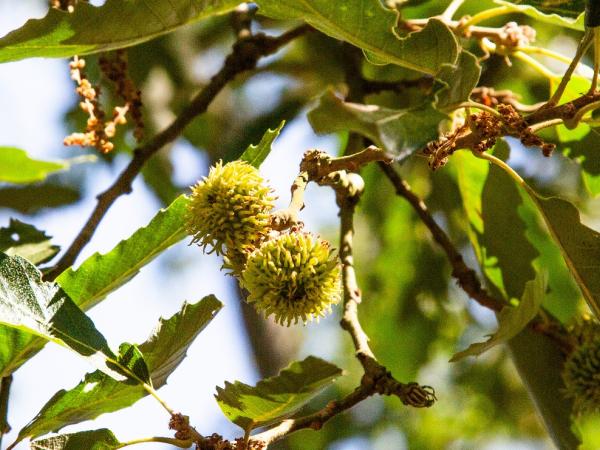
The only oak species endemic to Africa is rare in cultivation. It shouldn't be.
Project Contact: Arturo Mora-Olivo, Researcher, Universidad Autónoma de Tamaulipas, División del Golfo 356, Cd. Victoria, Tamaulipas, Mexico.

Executive Summary: In the northeast of Mexico and particularly in the northern Sierra Madre Oriental there is a high diversity of oaks, many of which are endemic or under some protection status. This is the case of six species of oaks that inhabit forests and scrublands in the states of Nuevo León and Tamaulipas: Quercus cupreata, Q. flocculenta, Q. galeanensis, Q. hintoniorum, Q. miquihuanensis, and Q. runcinatifolia. Since all populations of these oaks are small and are subject to threats such as climate change, forest fires and urban expansion, the challenge of this project is to obtain information (current status of populations and threats) to initiate conservation work and prevent their extinction in the natural environment.
To do this, we will conduct field trips and observational studies in nature to correctly identify species and determine whether a species is present or absent in its historical or predicted distribution. We will evaluate the population size, structure, phenology, and seed production of the oak species studied. We will collect seeds for germination and seek other means of propagating the species for placement in a nursery and/or botanical garden. We will identify the threats to the studied species and their ecosystems, seeking possible solutions. And finally, we will carry out environmental education activities to train local inhabitants on the importance and conservation of the oaks that are threatened.
At the end of the project, we hope to have new records of the presence and distribution of the oaks studied, to know the status of their populations, to identify threats and to propose actions for their conservation.
Target Species:
Quercus cupreata (EN)
Quercus flocculenta (EN)
Quercus galeanensis (EN)
Quercus hintoniorum (VU)
Quercus miquihuanensis (EN)
Quercus runcinatifolia (EN)
The International Oak Society acknowledges the generous support of the following institutions:
Supporting Institutional Members



Standard Institutional Members