Editor's Picks

While working on a list of synonyms of European White...
Roderick Cameron
|
Aug 24, 2026
Report led by The Morton Arboretum will help prioritize oak...
Website Editor
|
Aug 06, 2026
Motivation
I live in the village of Dolné Dubové...
Jozef Čapkovič
|
Jul 20, 2026
Plant Focus
The only oak species endemic to Africa is rare in cultivation. It shouldn't be.
The first of two UK Oak Open Days started in an unusual but spectacular garden, Maurice Foster's collections of cultivars, hybrids and wild-sourced woody plants. We were immediately received in the garden, where coffee, tea, and delicious cookies were ready to be served. The walk began after a brief explanation by Maurice about the garden.
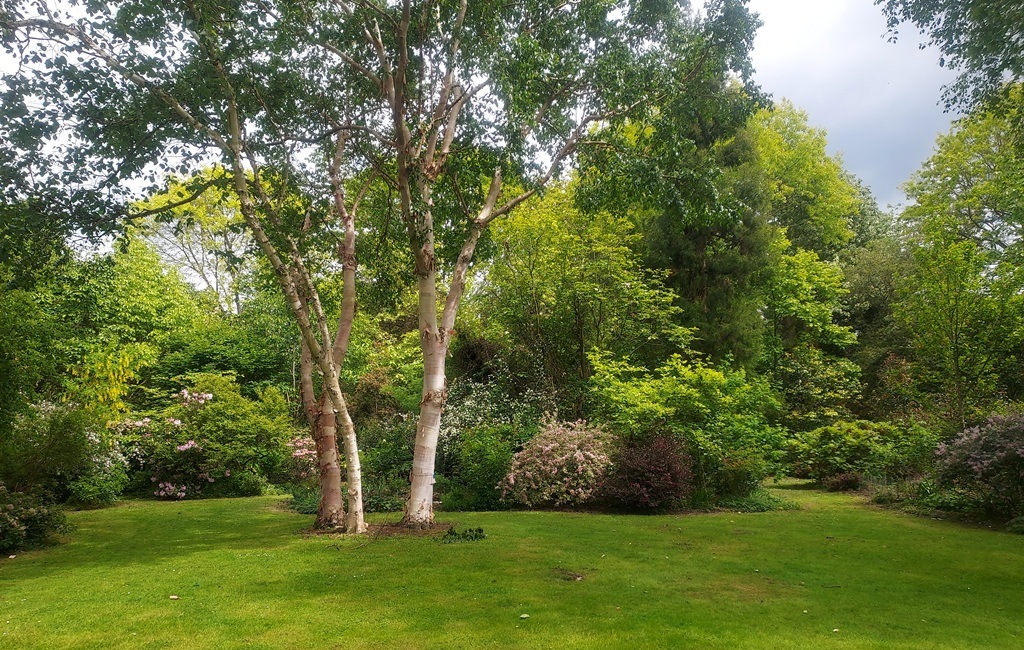
The White House Farm Garden and Arboretum extends over 15 acres east of Sevenoaks, Kent, developed from former strawberry fields and orchard ground into a collection of exceptional scientific and horticultural value. The 5‑acre garden, begun in the late 1970s by Rosemary and Maurice Foster, was planted entirely by hand and features woody plants underplanted with bulbs and herbaceous ground cover, designed to provide color and interest throughout the year. In 1994, Maurice added a 7‑acre arboretum devoted to wild‑collected trees and shrubs of known provenance, enriched by his participation in thirteen plant‑hunting expeditions across Asia and beyond, and in 2009 a 3‑acre wood was integrated to shelter less robust species and showcase woodland plantings. Together, the arboretum and wood—containing about 95% specimens of recorded wild origin and hybrids—test the long‑term viability of diverse taxa under southeastern England conditions.
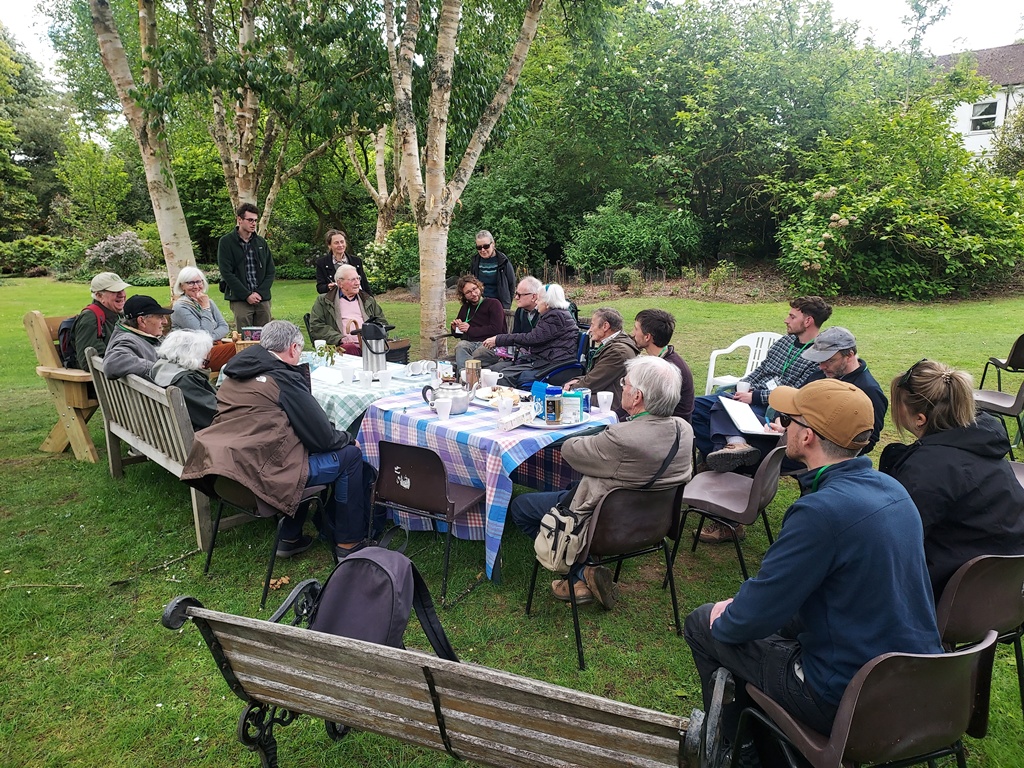
Highlights in the open arboretum include fine examples of rare Quercus, Acer, Betula, Carpinus, Sorbus, Tilia, and many conifers, interplanted with shrubs such as Mahonia, Rosa, Viburnum, Berberis, Deutzia and many others. We were accompanied by Maurice, his daughter Clare, and trustees.
The soil is slightly acidic (pH 5.5-6) and the collection contains about 70 oaks. Impossible to discuss all of these, but these are ones that have stuck with me:
- One of the oldest planted species was Quercus palustris. Unfortunately, a number of these have withered away due to an unknown cause. A disease, the drought, or a combination of both?
- Quercus augustinei is a tree from North Vietnam, Laos, Thailand and south China, with bronze young foliage and is growing well in the sheltered woodland.
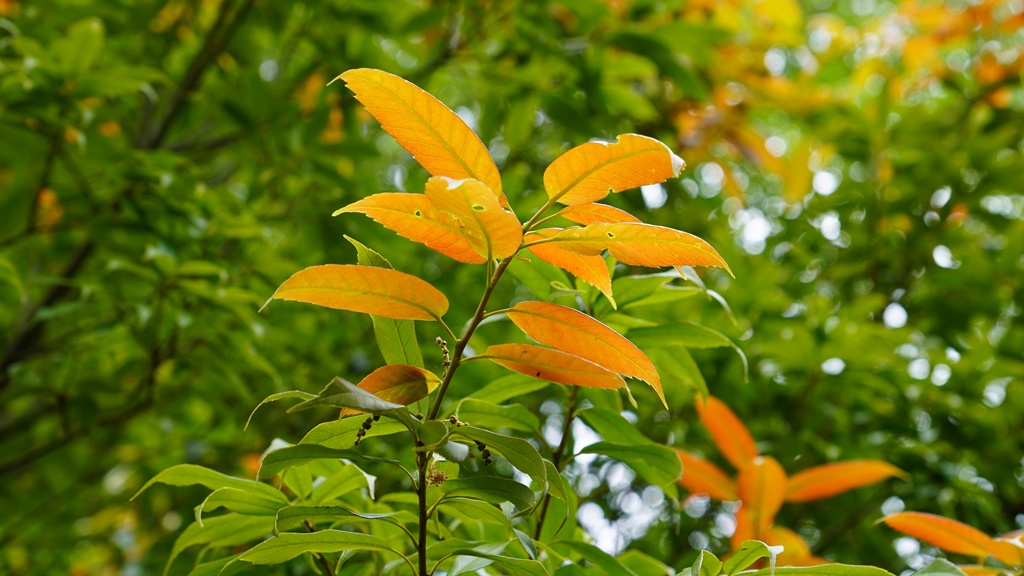
-
Quercus rehderiana is a Section Ilex species from China. The young leaves are also an orange-red color.
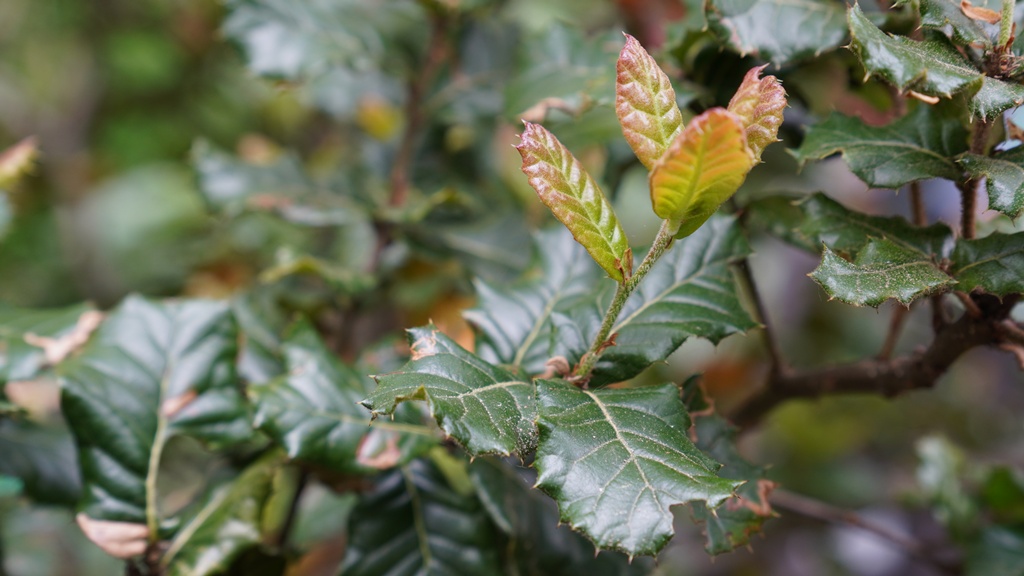
Quercus rehderiana -
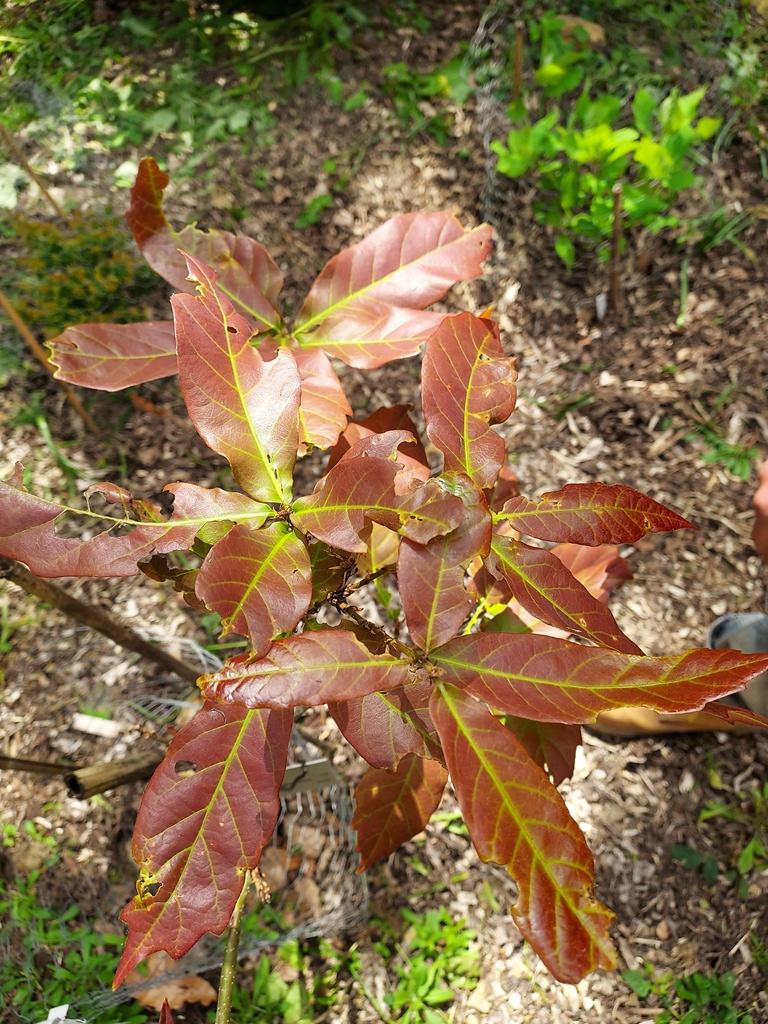
Quercus glabrescens is an evergreen tree. It is a handsome oak, apparently quite hardy. Quercus germana is threatened in the wild by habitat loss for coffee plantations. Both are Mexican species that are quite rare in collections.
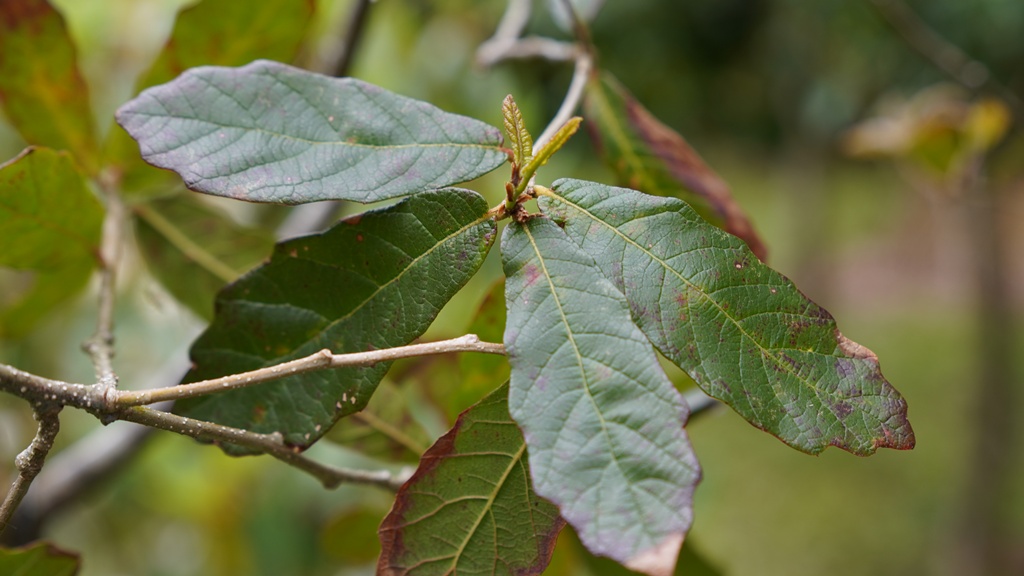
Quercus glabrescens
-
Quercus miquihuanensis, also a Mexican species. It has deeply veined glossy green leaves and is a large shrub.
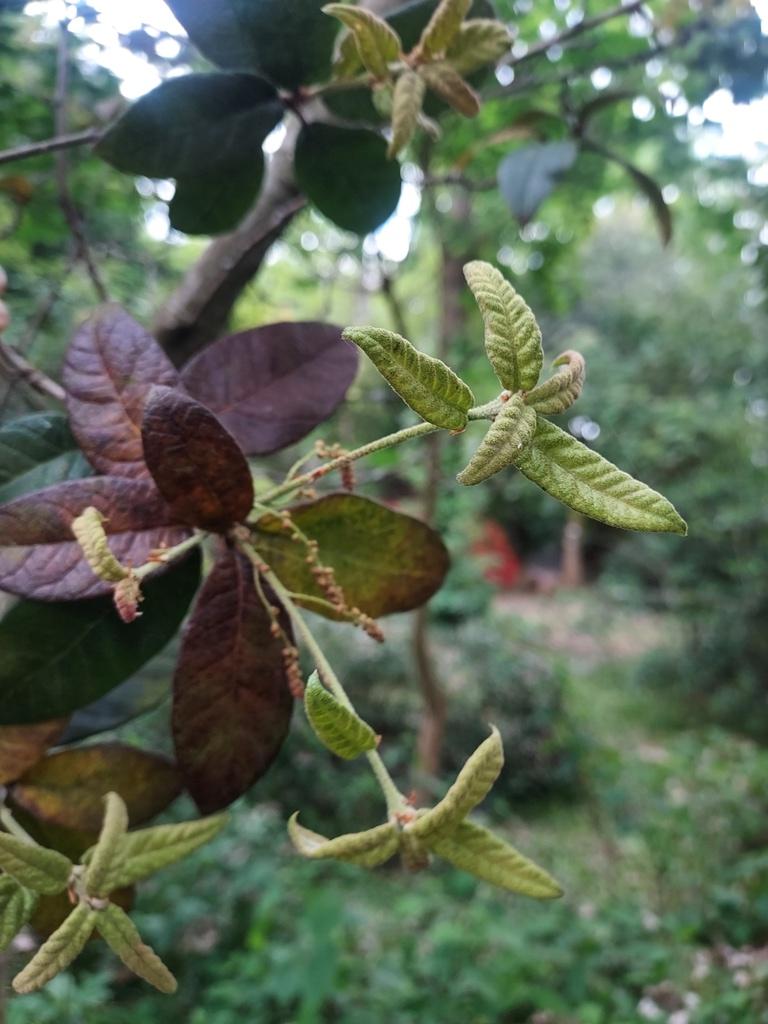
Quercus miquihuanensis © Roderick Cameron -
But the absolute Quercus highlight was undoubtedly lamellosa. This species is described as being not sufficiently hardy in Northern Europe , but here it was planted among Ilex aquifolium to get enough protection.
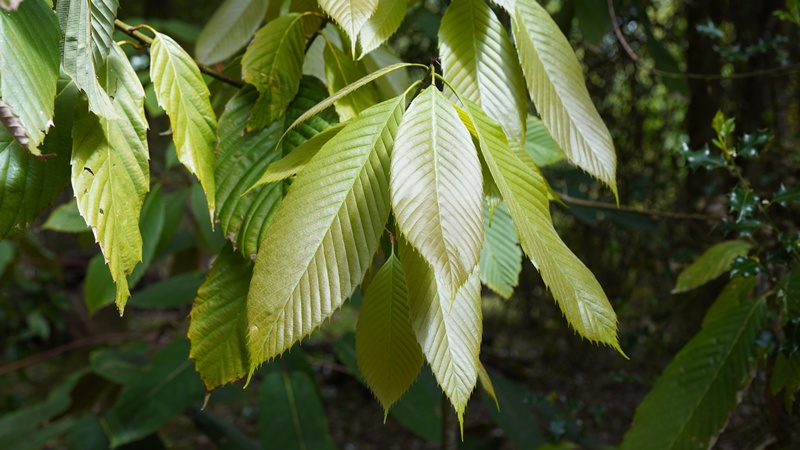
Quercus lamellosa -
Two Asian species are worth mentioning: Q. hondae from southern Japan, which had suffered from a little frost damage, and Q. oxyodon, whose leaves have a beautiful whitish or blue frosted underside.
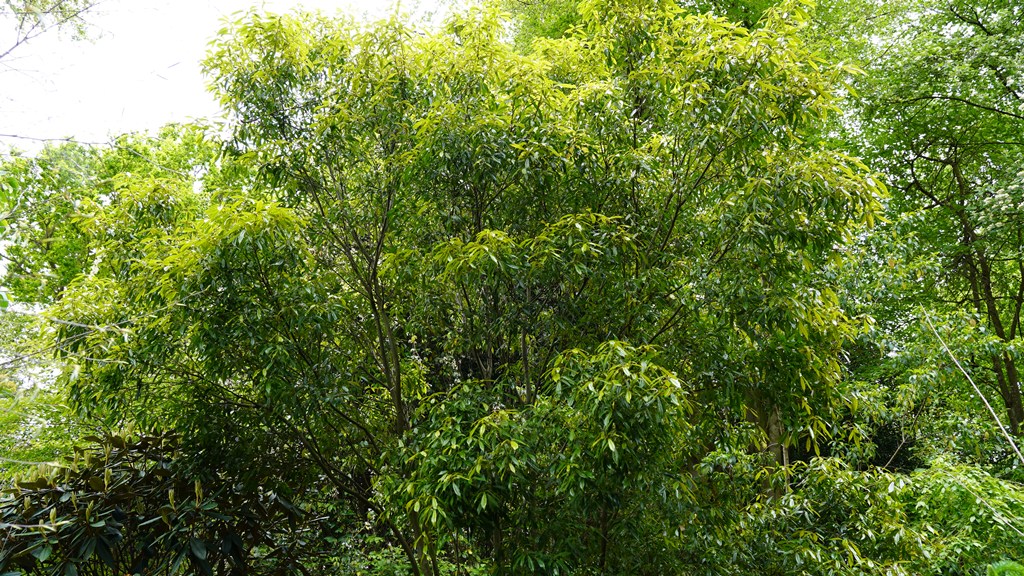
Quercus hondae
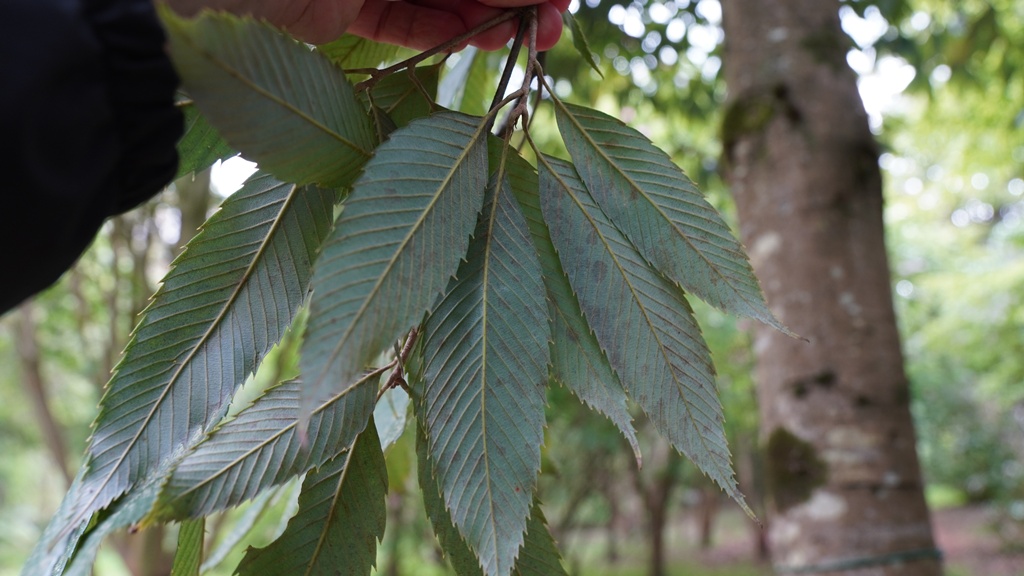
-
Finally, a pleasant acquaintance for me was Q. aquifolioides (from Bhutan, Myanmar, and China). The young emerging red male flowers contrast nicely with this dark foliage.
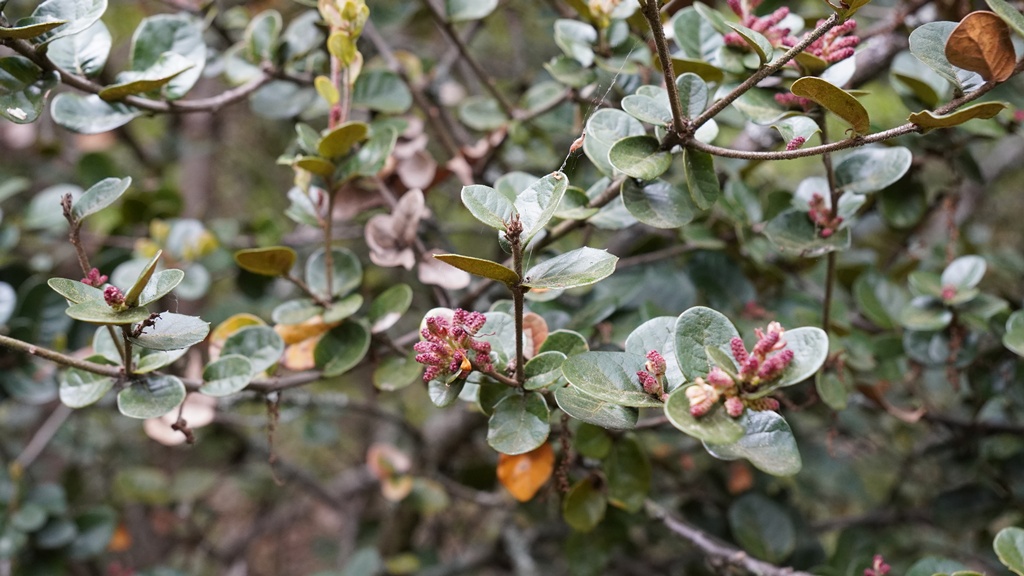
Quercus aquifolioides
There are many Asian plants in the collection because Maurice participated in various trips into China, Pakistan, Mongolia, Japan, but also to Tasmania and New Zealand. Staying in the Fagaceae family, we saw Castanea henryi from China, with abundant, very ornamental inflorescences, making the species an attractive garden and park tree, and Notholithocarpus densiflorus, the tanbark oak, native to California and Oregon in the USA.
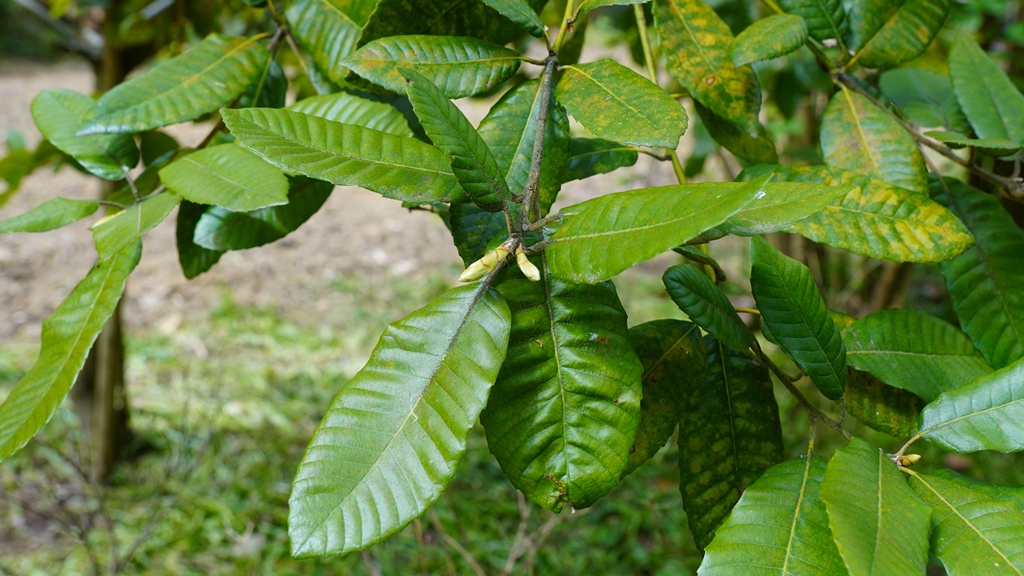
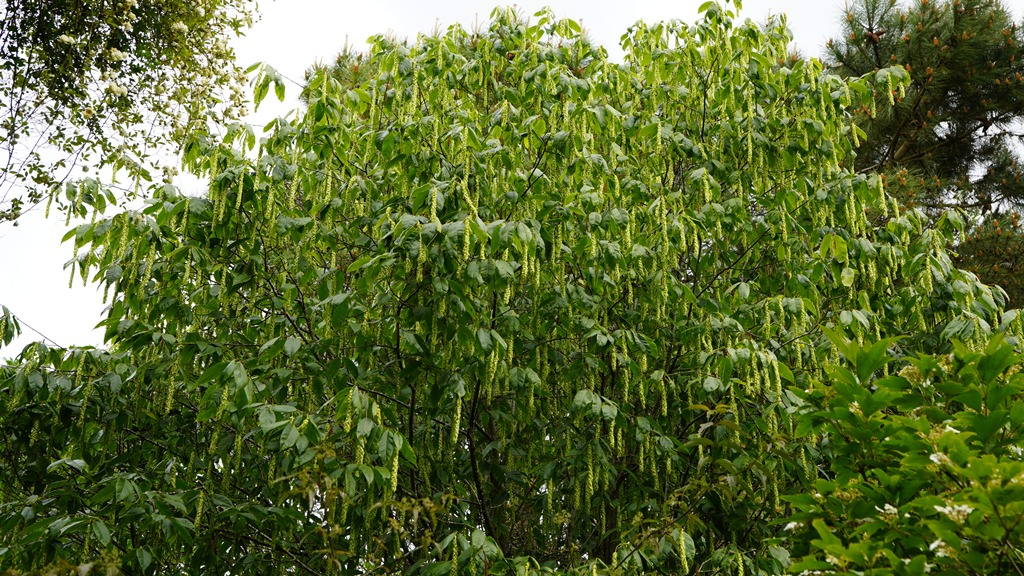
The Carpinus (hornbeam, Betulaceae) species were likewise not the common trees that we see everywhere. Carpinus fangiana with its very long female catkins, C. rankanensis from the mountain forest of Taiwan, with conspicuous female infructescences that take on red-pink tints when exposed to sun, and C. monbeigiana, with D-shaped fruit-bracts and dense yellow hairs along the veins.
Betula calcicola is a dwarf Chinese birch, with white, densely hairy stems and small leaves, lustrous rich green, and prominently veined and ridged.
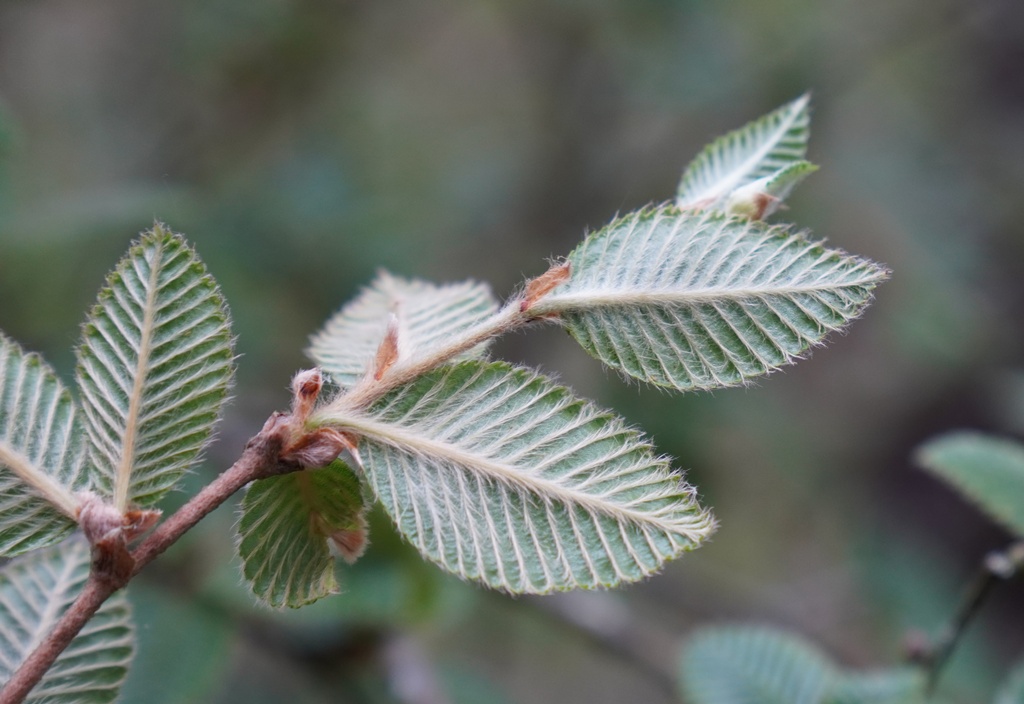
Other shrubs and trees we saw on our trip were:
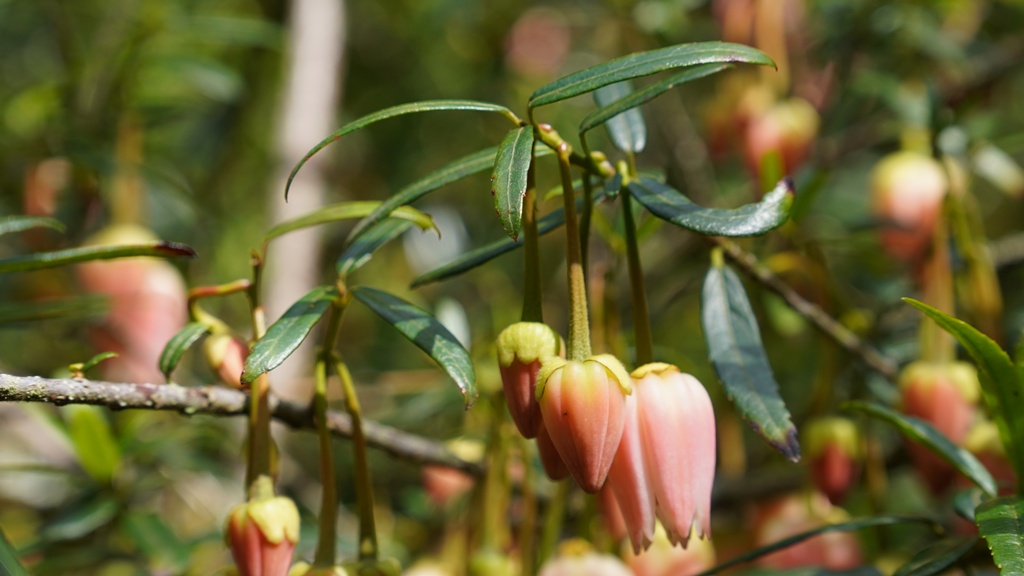
Crinodendron hookerianum 'Ada Hoffmann', an attractive pale-pink flowered clone.
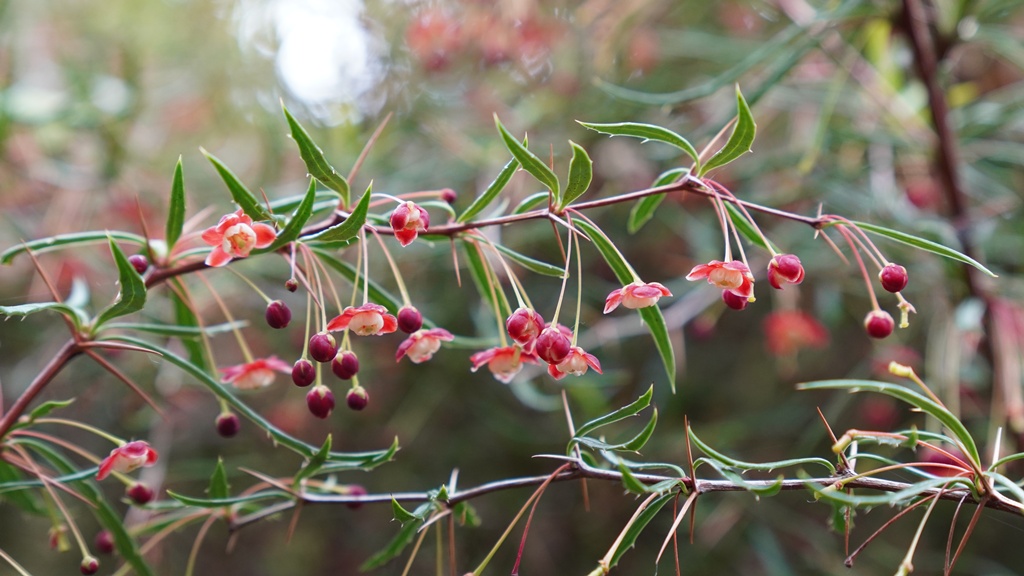
Berberis triacanthophora 'Cally Rose', a striking and showy small to medium-sized evergreen shrub with quite an informal habit.
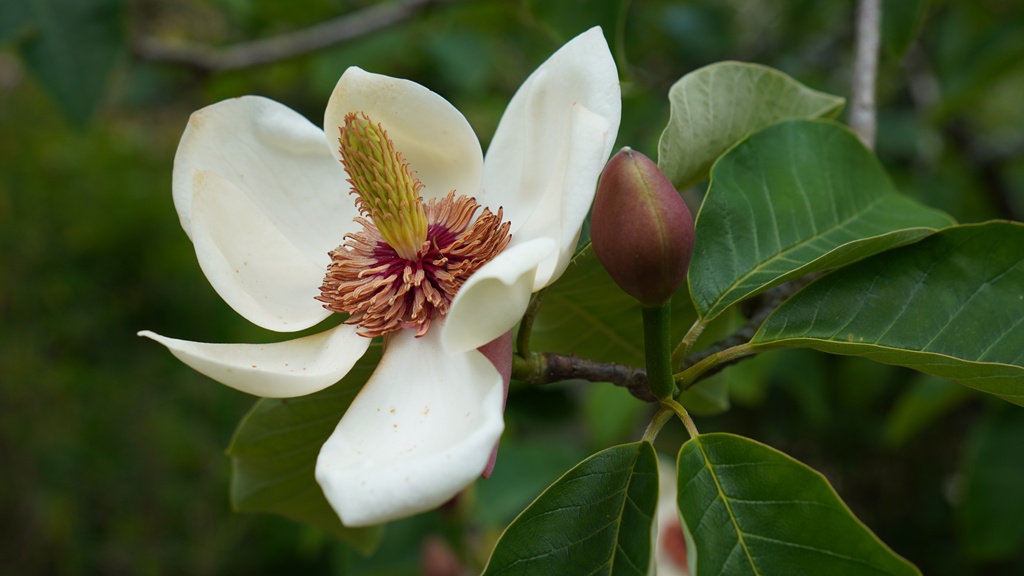
During our walk, we came across several late-blooming magnolias. Magnolia ×wieseneri planted near the house spread a pleasant fragrance. Another beautiful plant is Magnolia 'Parachute'. This is a seedling of Magnolia sieboldii with beautiful hanging flowers, which are therefore easy to admire.
Cornus VENUS™ is a particularly profuse in flowering and the sea of large white flowers covers the entire shrub.
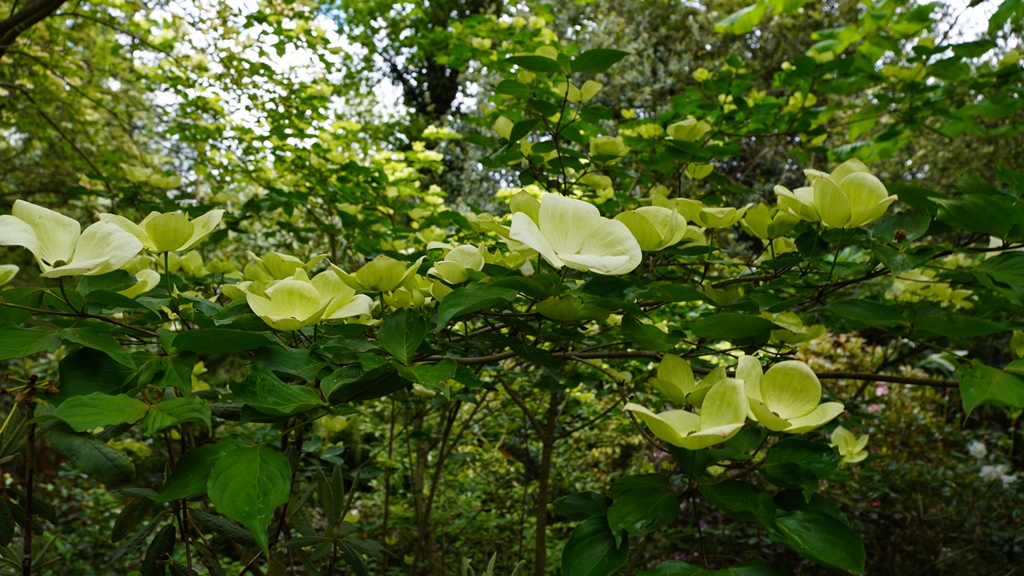
A new plant for me was Berberis hartwegii (syn. Mahonia hartwegii). It is an endemic species from Mexico.
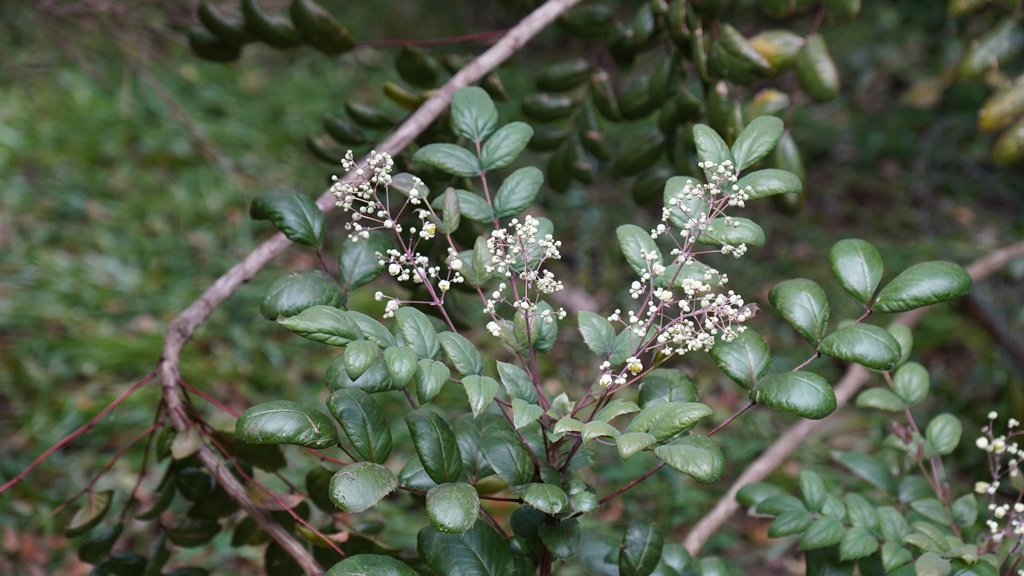
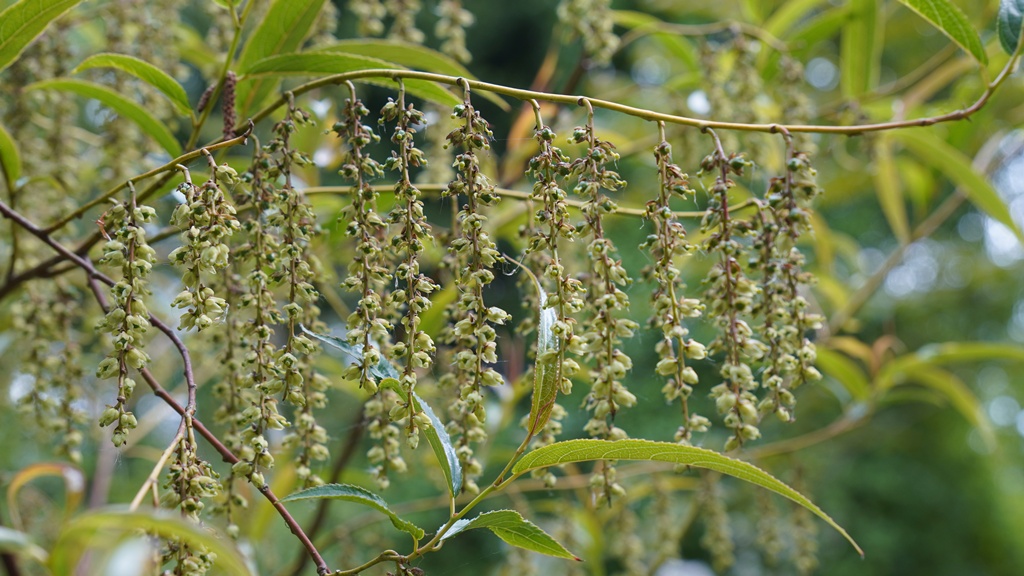
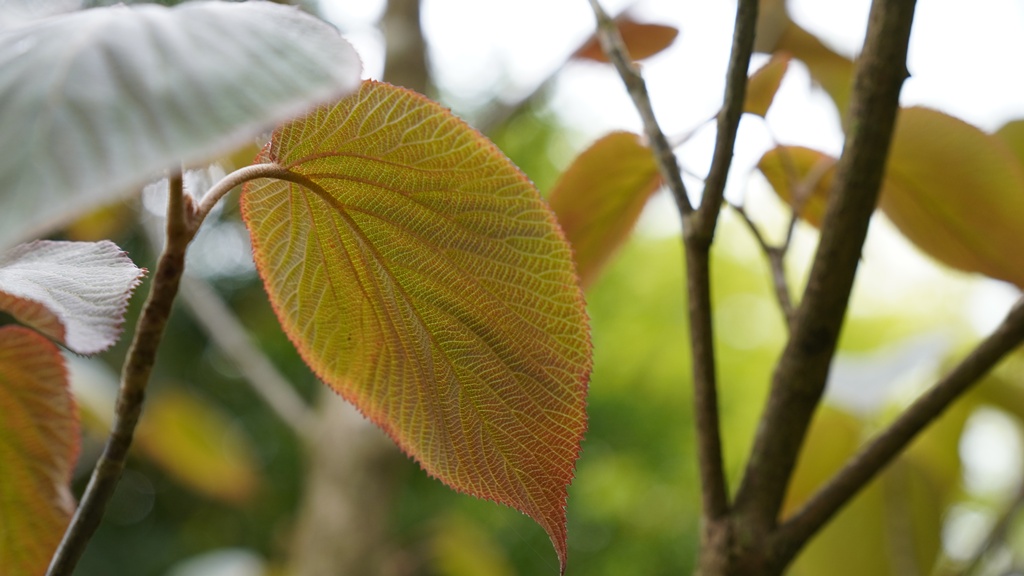
Pittosporum illicioides var. angustifolia, Poliothyrsis sinensis, Camellia trichocarpa, and Stachyurus praecox var. matsuzakii (labelled as S. lancifolius), were admired.

Unfortunately, still only at the beginning of the blooming period, Viburnum erubescens was already striking. Viburnum sympodiale stood out because of the beautiful leaves.
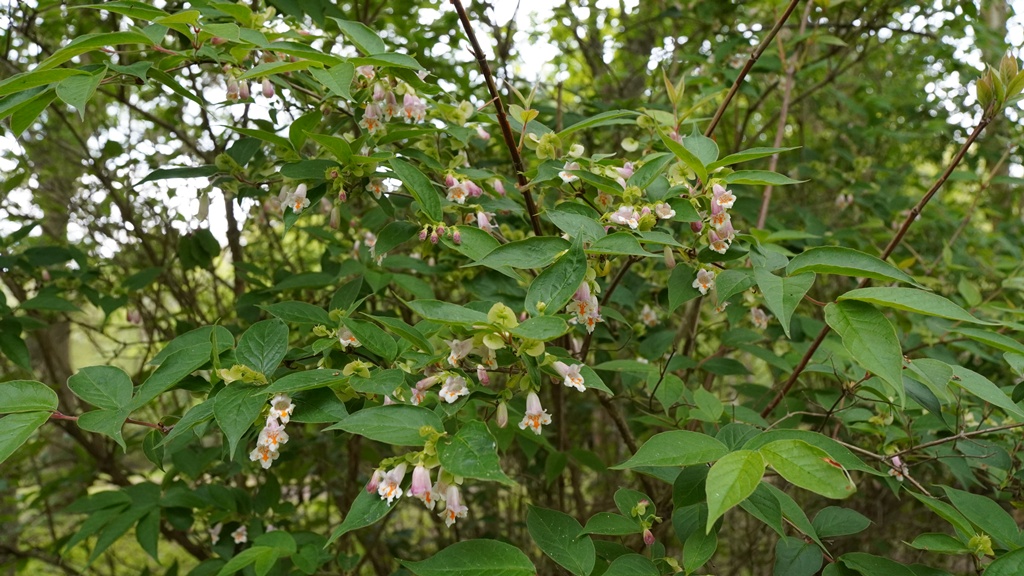
Here Dipelta yunnanensis was in bloom. The corolla of the flowers is white to cream or pink with orange markings in the throat. As with all species in this genus, the exfoliating bark is striking.
At the end of the day, still enjoying a last cup of tea or coffee, everyone was asked which type of oak, and which other plant, was their personal favorite. Some species were mentioned multiple times, but there was a overall a large number of plants chosen, reflecting the varying tastes of participants.
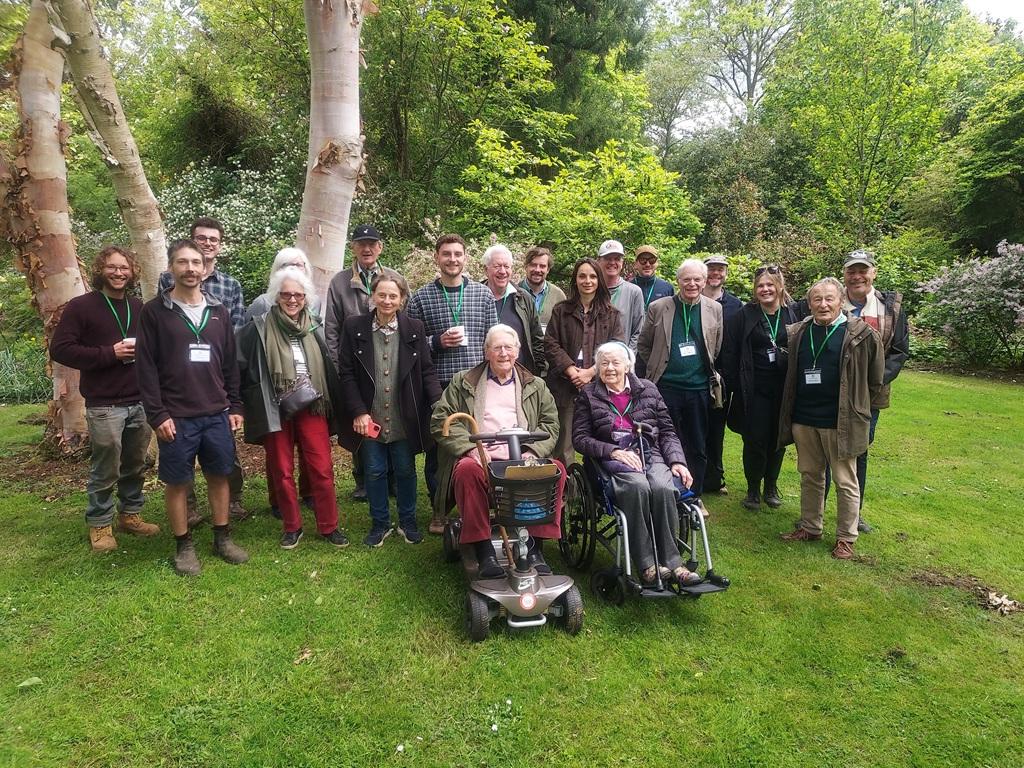
A huge thank you is due to our hosts Maurice and Clare, and also to Jack Aldridge, a trustee of White House Farm, who helped guide us and shared his encyclopedic knowledge during the visit.
Photos © Jan Awouters unless specified
The International Oak Society acknowledges the generous support of the following institutions:
Supporting Institutional Members



Standard Institutional Members