Editor's Picks

While working on a list of synonyms of European White...
Roderick Cameron
|
Aug 24, 2026
Report led by The Morton Arboretum will help prioritize oak...
Website Editor
|
Aug 06, 2026
Motivation
I live in the village of Dolné Dubové...
Jozef Čapkovič
|
Jul 20, 2026
Plant Focus
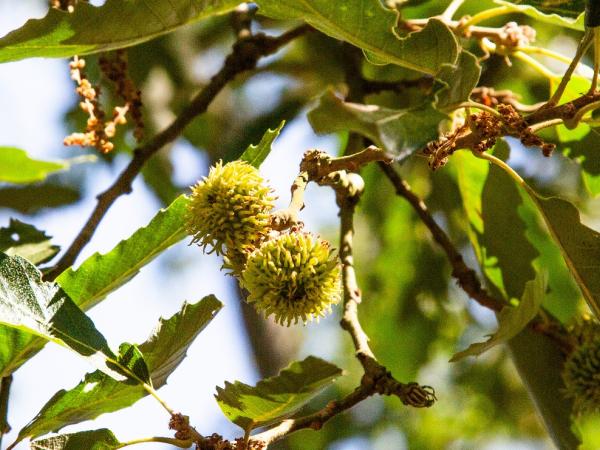
The only oak species endemic to Africa is rare in cultivation. It shouldn't be.
 |
The oak has always been of great importance to the UK, albeit these days more in symbolic than practical terms: the “wooden walls” of the great fleets are an image of the distant past. Yet equally the axe had often been spared: the country claims to have more surviving ancient oaks than the rest of Europe put together. However, in this modern age of easy and rapid travel, tree maladies have become convinced globalists: every year it seems that some new affliction affects one tree genus or another. This malign trend has concentrated the minds of environmentalists in the UK, and has culminated in the launch of the Action Oak partnership at this year’s Chelsea Flower Show in London last May. The partners include all the environmental big hitters: the UK government Department of Environment, Food, and Rural Affairs (DEFRA), and the Scottish, Welsh, and Northern Ireland governments; the Forestry Commission and Royal Botanic Gardens Kew; the Duchy of Cornwall; and charities such as the National Trust, Woodland Heritage, and the Woodland Trust. A serious grouping indeed! The aim of the partnership is to protect oaks for future generations by:
- Working with owners and managers of oak trees and woodlands to help to protect the trees from a range of threats
- Funding research to improve understanding of the threats to oak trees and to inform best management practices
- Using established professional and citizen science networks to record changes in the distribution, age, and health of our oak trees to identify priority areas for action
- Encouraging organizations to join the Action Oak partnership and people to support Action Oak
Action Oak can be contacted at info@actionoak.org, you can follow @actionoak and the hashtag #actionoak on Twitter, and further information can be found on their website www.actionoak.org
UK members in particular, if not already doing so, may be interested in supporting this important venture.
You can read more about Action Oak on the website of The Woodland Trust
Content by the Same Author
The International Oak Society acknowledges the generous support of the following institutions:
Supporting Institutional Members



Standard Institutional Members