Editor's Picks

While working on a list of synonyms of European White...
Roderick Cameron
|
Aug 24, 2026
Report led by The Morton Arboretum will help prioritize oak...
Website Editor
|
Aug 06, 2026
Motivation
I live in the village of Dolné Dubové...
Jozef Čapkovič
|
Jul 20, 2026
Plant Focus
The only oak species endemic to Africa is rare in cultivation. It shouldn't be.
A recently reviewed paper (Passos et al., 2026a) described the use of Species Distribution Models to forecast the likely future distribution of populations of three oak species, including Quercus pyrenaica, in the Iberian Peninsula under two possible climate change scenarios. The modelling indicated that the species is likely to experience major range contraction and local extinctions by the end of this century.
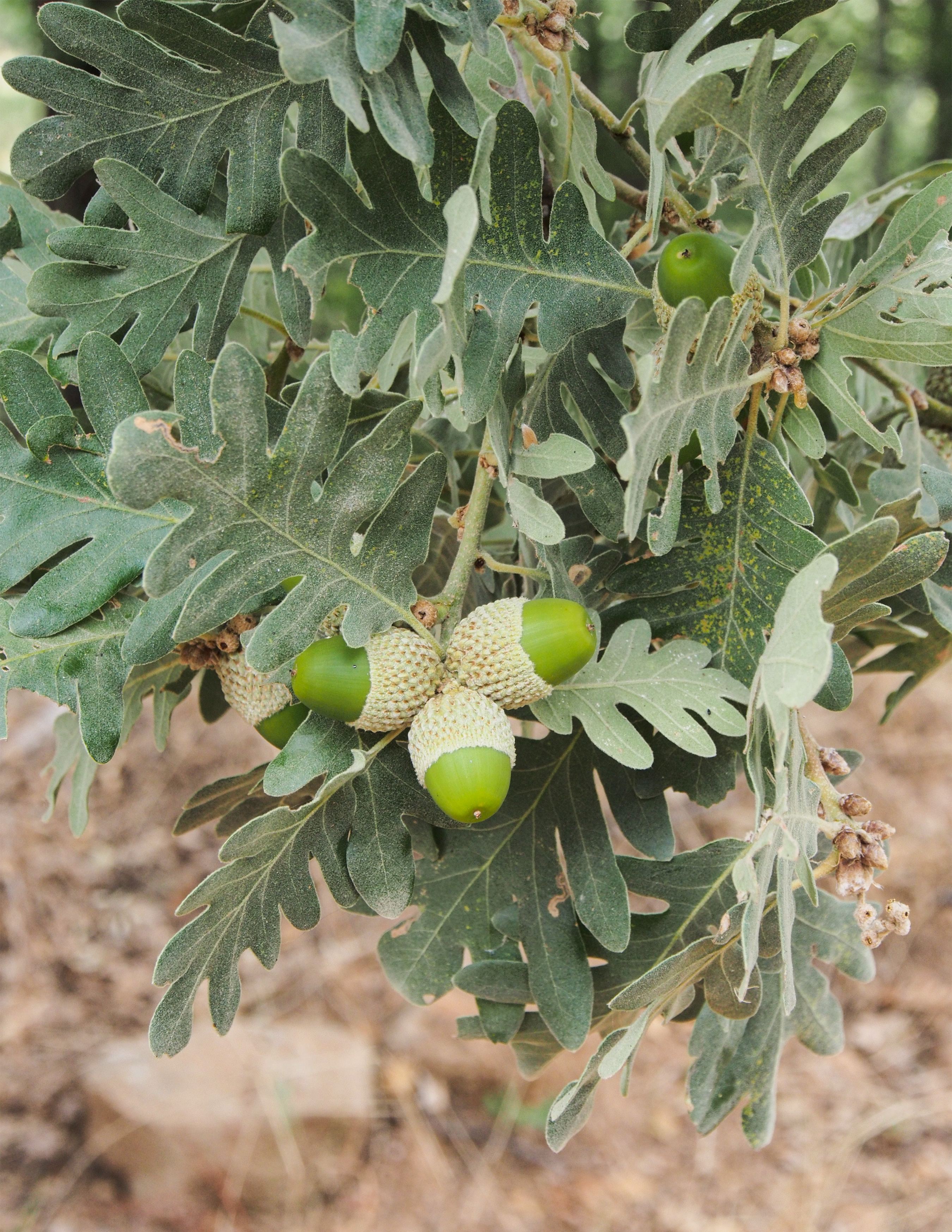
© Luis Fernández García. Reproduced under the Creative Commons Attribution-Share Alike 4.0 International license.
The ‘common’ common name of Pyrenean oak is a misnomer. It has an Atlantic - Mediterranean distribution, from northern Morocco, through the north-western part of the Iberian Peninsula to south-western and western France, but it is only very rarely encountered in the Pyrenees. It’s an elegant tree, sometimes of a pendulous form, and good specimens are to be found in a number of ex-situ collections.
In the wild one of the limiting factors to its distribution is summer drought. It prefers the transitional zone between areas with a semi-arid Mediterranean climate and those to the north and west with sub-humid temperate conditions. It tends to be restricted to acidic soils, avoiding limestones and dolomitic rocks. As a transitional species, it is at risk of a lack of resilience to climate change, especially in the south of its range, where it’s likely to be replaced by cork oak, Q. suber. This vulnerability is compounded by a number of other factors, such as recurrent wildfires, the spread of invasive species, and deliberate replacement by Eucalyptus and pine plantations. In Spain, bacteria that are associated with acute oak decline (AOD) in England have been isolated from samples of Q. pyrenaica (Potter, 2025). In partial mitigation of these factors, some abandonment of farming, particularly of grazing, has provided opportunities for habitat recovery.
The same quintet of researchers responsible for the previous paper, including IOS member Carlos Vila-Viçosa, have now published a further paper (Passos et al., 2026b) that explores the use of satellite remote sensing and machine learning to forecast distribution changes over a much shorter timescale, in a more restricted study area in Portugal. As the paper states, “This study aims to perform a preliminary assessment of closed-canopy Q. pyrenaica forests in north-central Portugal and to quantify recent spatial changes using remote sensing data and a machine learning Random Forest classifier.”
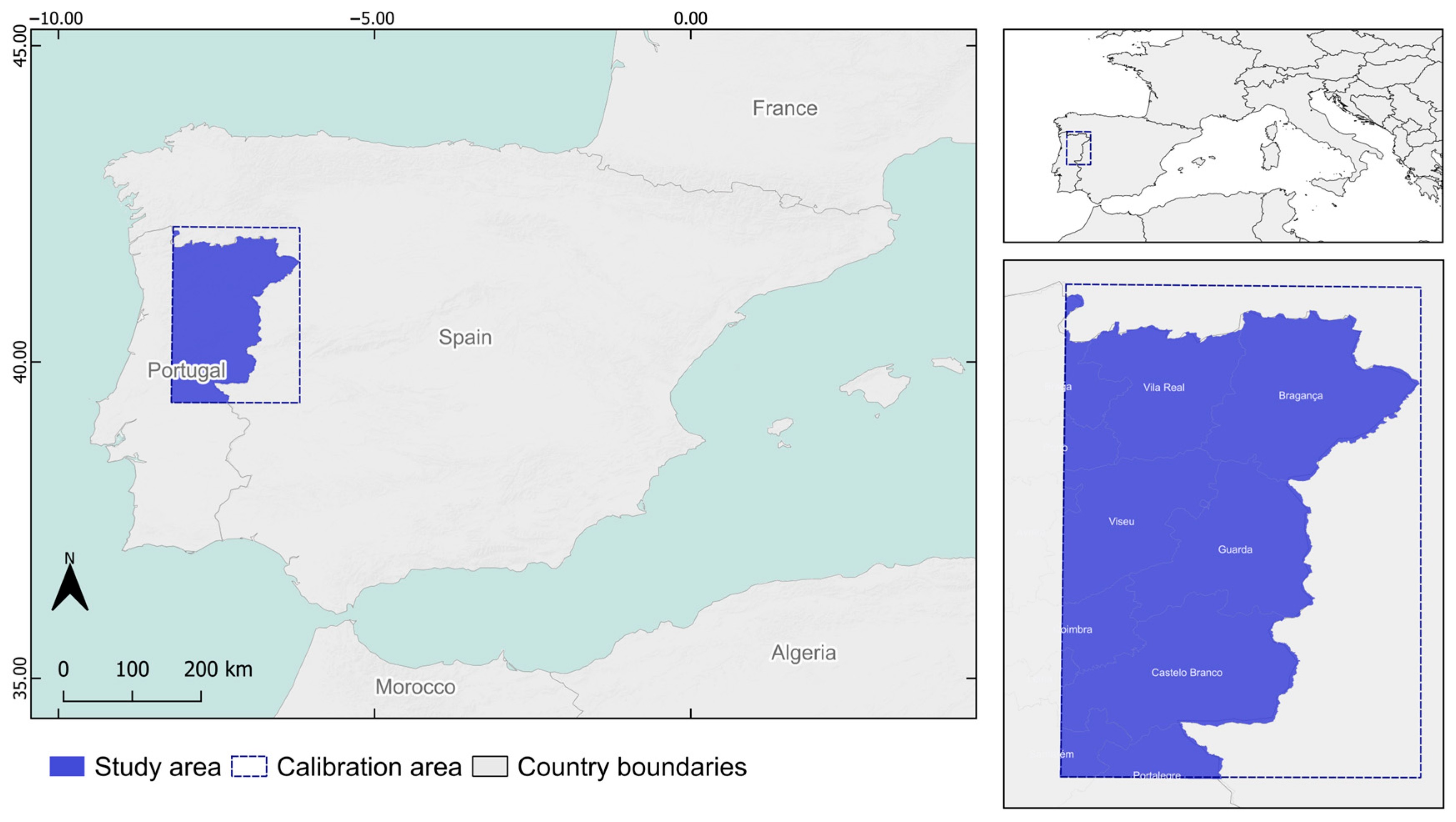
The methodology utilized “multispectral bands from Sentinel-2 time-series data, vegetation indices, embedding vectors generated by Google’s AlphaEarth foundational model, and topographic variables, [to apply] a machine learning Random Forest classifier to map Q. pyrenaica forests in 2019 and 2024 and to analyze their spatial configuration patterns.” Any critical assessment is well beyond the capabilities of this reviewer—and it’s notable that the paper has been published in the journal Remote Sensing rather than in any of the more traditionally oak-leaning publications. It should be seen as an exercise in establishing a methodology for future monitoring and the provision of baseline data to that end.
Nonetheless, some conclusions can be drawn. The modelling indicates that there has been a short-term phase of woodland recovery subject to some land-use constraints, through the establishment of small, poorly connected patches, so while the total area of Q. pyrenaica woodland has increased it has been at the expense of declining structural integrity. The authors advise that conservation strategies should give priority to the maintenance of core habitat, aiming to reduce edge exposure and to promote connectivity between patches, particularly at the warmer and drier margins of the range. Further work to disentangle the relationships between natural regeneration, recovery disruption through processes such as wildfires, and agricultural abandonment, all in the context of a changing climate, will be of value. A particular conclusion that the authors don’t highlight might be the value of establishing further ex-situ collections of this charismatic species.
Works cited
Passos, I., A. Figueiredo, J. Gonçalves, M.M. Ribeiro, and C. Vila-Viçosa. 2026a. Exploring turnover dynamics in Iberian Oak forests under climate change scenarios. Discover Conservation 3: 14. [link]
Passos, I., C. Vila-Viçosa, M.M. Ribeiro, A. Figueiredo, and J. Gonçalves. 2026b. Mapping Spatial Patterns and Recent Changes in Quercus pyrenaica (Willd.) Forests Using Remote Sensing and Machine Learning. Remote Sensing. 18(8): 1208. [link]
Potter, S. 2025. Acute Oak Decline and the Decline Disease Spiral Model: the State of the Game in the UK. International Oak Society. [link]
Content by the Same Author
The International Oak Society acknowledges the generous support of the following institutions:
Supporting Institutional Members



Standard Institutional Members