Editor's Picks

While working on a list of synonyms of European White...
Roderick Cameron
|
Aug 24, 2026
Report led by The Morton Arboretum will help prioritize oak...
Website Editor
|
Aug 06, 2026
Motivation
I live in the village of Dolné Dubové...
Jozef Čapkovič
|
Jul 20, 2026
Plant Focus
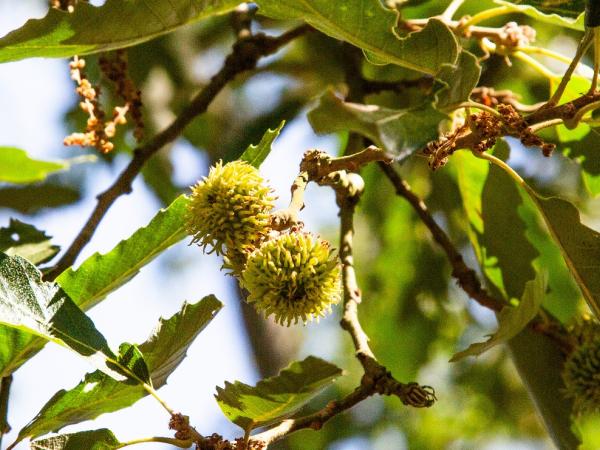
The only oak species endemic to Africa is rare in cultivation. It shouldn't be.
This new entry in our series on Oak Poetry features a poem by Alfred, Lord Tennyson. In an advisory tone, it compares human life to the cycle of an oak tree through the seasons. It is deceptively simple in form: three stanzas of five lines, each consisting of three syllables with a similar strong-weak-strong pattern (a cretic or amphimacer). See here for an analysis of the poem.
If you would like to propose a poem for inclusion in this series, please click here.
The Oak
Live thy Life,
Young and old,
Like yon oak,
Bright in spring,
Living gold;
Summer-rich
Then; and then
Autumn-changed
Soberer-hued
Gold again.
All his leaves
Fall'n at length,
Look, he stands,
Trunk and bough
Naked strength.
You can hear a reading of the poem by Julian Glover here.

Alfred, Lord Tennyson (1809–1892) was England’s Poet Laureate for much of Queen Victoria’s reign, renowned for his lyrical mastery and deep emotional resonance. Born in Somersby, Lincolnshire, Tennyson studied at Trinity College, Cambridge, where he joined the literary Apostles. His early work, including Poems, Chiefly Lyrical (1830), revealed his romantic sensibility. With In Memoriam A.H.H. (1850), he mourned a friend’s death and gained national acclaim. Elevated to the peerage in 1884, he became Baron Tennyson of Aldworth and Freshwater. His verse, including The Charge of the Light Brigade and Ulysses, captured Victorian ideals and anxieties. He was buried in Westminster Abbey. Full biography here.
Content by the Same Author
The International Oak Society acknowledges the generous support of the following institutions:
Supporting Institutional Members



Standard Institutional Members