Editor's Picks

While working on a list of synonyms of European White...
Roderick Cameron
|
Aug 24, 2026
Report led by The Morton Arboretum will help prioritize oak...
Website Editor
|
Aug 06, 2026
Motivation
I live in the village of Dolné Dubové...
Jozef Čapkovič
|
Jul 20, 2026
Plant Focus
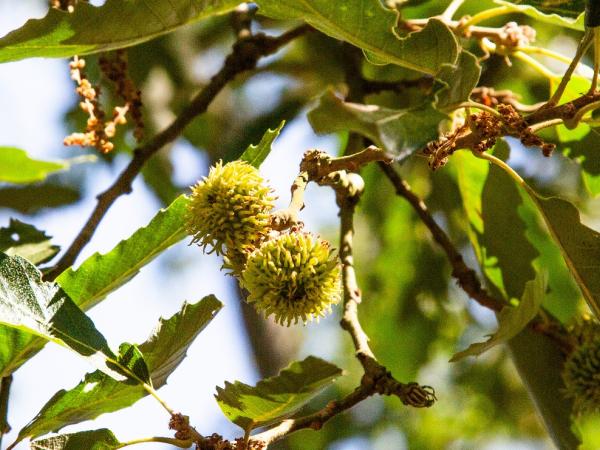
The only oak species endemic to Africa is rare in cultivation. It shouldn't be.
At the end of my review of this paper, I made the point that its findings were so important for the conservation of oaks that we would need to probe its implications in subsequent articles. Here we talk to the paper’s lead author, IOS member Dr. Blair McLaughlin.
Your paper indicates that the prospects for some of California’s oaks appear bleak. Had you envisaged this before carrying out the work, or did it come as a grim surprise?
BM: Our team was stunned by the extent of it. From my own fieldwork on Quercus douglasii and Q. lobata (blue and valley oak), I had seen some early die-offs and recruitment failures up close, so I knew there were some conservation challenges, but until we did this recent work I hadn’t realized the full extent of what is coming or how many foundational species are likely to be impacted. Even if you take the most optimistic projections, for instance, you take the most conservative climate change scenarios, and you estimate 10% of their current range as new suitable habitat into which they could successfully move (a generous estimate), it’s really bad.
There is often resistance to this idea, with some people not wanting to believe that this is happening, but the point of the paper is that actually we do have enough evidence now from field studies to indicate that for some species the responses on the ground are starting to reflect what’s projected in the models.
That said, I want to clarify one important nuance about what the models are telling us. They project the loss of climatically suitable habitat, but we don’t know for sure which life stage the climate is limiting—if it’s the young life stages, adults may remain throughout the rest of their natural lifespans even in an area where the model projects a loss of suitable climate, but they won’t be able to reproduce (that’s been called “zombie forests”). This is where the field studies are really important, to help us better understand what’s happening on the ground, what life stages are being impacted and how to prioritize conservation.
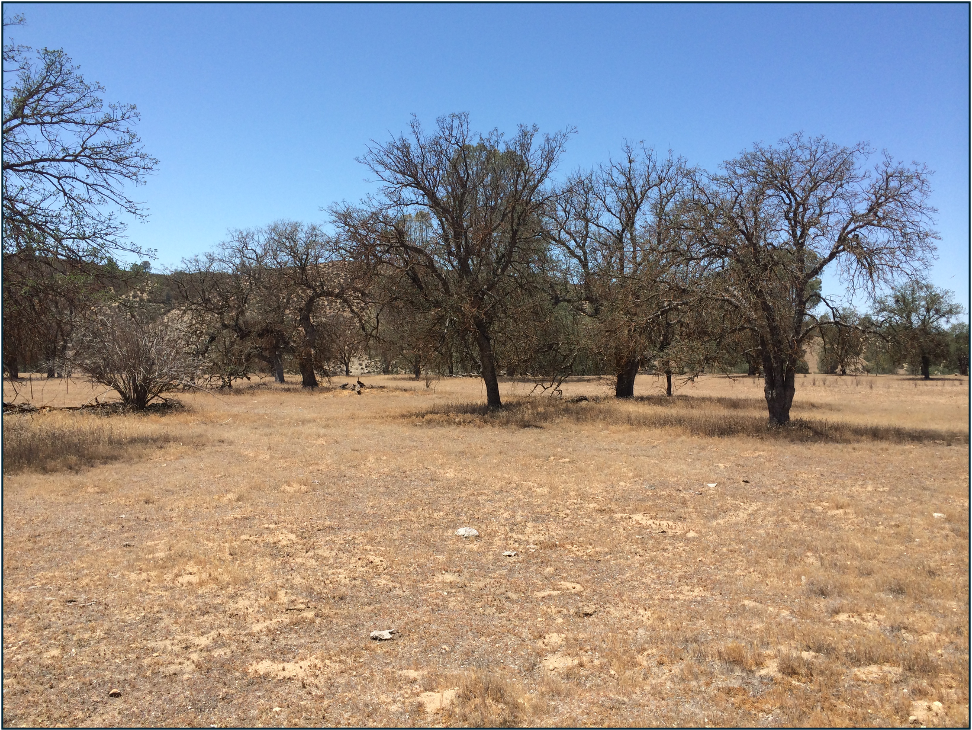
© Blair McLaughlin
It seems that there are three main options for the conservation of these oaks: the protection of existing climatic refugia; the assisted migration of species northwards and to higher elevations; and ex-situ conservation. We will address the ex-situ option in a later conversation, but for now could you tell us about your experience of participatory field gene banking?1 And how big a part do you think that assisted migration should play?
BM: Protecting refugia is key. This can either be microrefugia within areas that are projected to be lost with climate change (for oaks this could be areas of persistently high groundwater) or regional refugia, i.e., the broader regions that are likely to remain climatically suitable for longer. Refugia need to be better prioritized in land-use planning and conservation acquisitions. Even in California, one of the more climate-cognizant jurisdictions, we currently do not integrate projected climate impacts on foundation species in our big conservation initiatives, like 30x30.
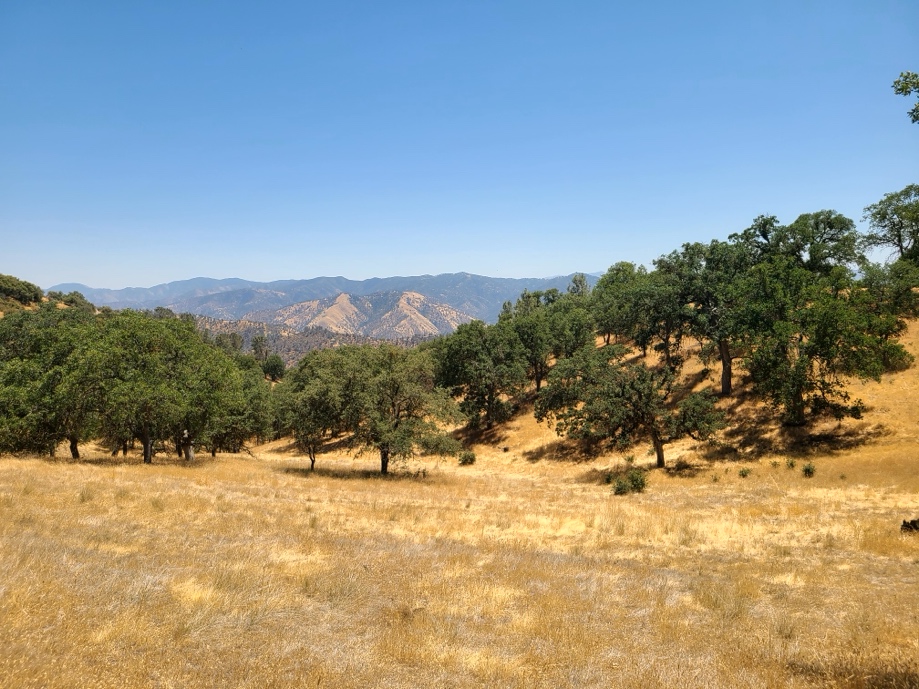
if the Quercus douglasii were lost
© Ioana Anghel
A complementary priority is genetic rescue. Since some of these species are already starting to lose their “xeric edge” populations in situ—and those are the populations that are most adapted to warm/dry climates—genetic rescue is critical to identify and preserve the genotypes that are going to be needed for restoration in a warming and drying climate. For oaks, since we can’t put acorns in a conventional seedbank, one way to conserve these genotypes is outplanting. And that’s why we are working to build the Blue Oak Living Library, a collection of outplanted xeric edge seedlings, dispersed across many lands within the species’ projected regional refugia.
Assisted migration can be a really difficult concept because it means we have to face the enormity of the problem and how much our sense of the relationship between species and place is being disrupted. As an aside, I think the term “assisted migration” is misleading as it implies leaving one place for another, which suggests we’d be removing something from where it currently exists to bring it somewhere else. When in fact, we wouldn’t take anything away from the places species currently are, but just effectively increase their range of dispersal. Also, in the US “assisted migration” can evoke painful events in the country’s founding, like the forced migrations of Indigenous people out of their homelands. So for clarity, I prefer to use terms like “facilitated dispersal”.
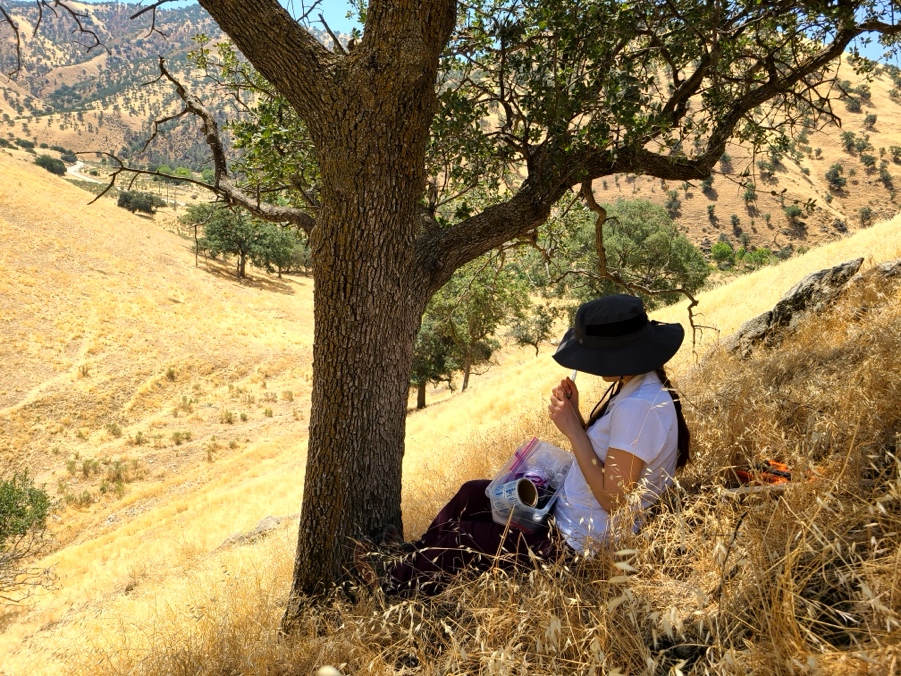
© Ioana Anghel
One way to think of this is to imagine how these trees would disperse into newly suitable habitat on their own if the climate were changing at a more natural, slower pace. As humans have already sped up climate change, we may also need to help speed up the movement of trees accordingly. Done in the right way, this would mimic as closely as possible a natural process—in accelerated form. Our research team is working on models of where newly climatically suitable habitat is likely to be, and how far the oaks can go from where they currently are, based on what we know about acorn dispersal. We can show where the natural linkage zone is—where current habitat and new habitat are in close enough proximity that the species can move on its own; and where new habitat is beyond natural dispersal reach—where humans would need to help. All that said, I think this should only be considered cautiously and deliberately, for species that really don’t have other good options, in collaboration with land stewards who know the local landscapes well and with our best models and field testing to guide it. Haphazard planting of someone’s favorite tree all over the places isn’t a good use of resources and probably isn’t very helpful.
Also, to inform all of these conservation strategies, we need to keep studying species’ range edges, to better understand how climate change is playing out on the ground. The models give us great hypotheses about what’s happening, but they need to be tested in the field and refined. And finally, we need to find ways of increasing climate-adaptive protections while also supporting land stewards, including Indigenous tribes and their traditional stewardship practices; and the ranching community, which in California is currently managing most of the oak woodlands and keeping them out of more intensive land uses.
For more information about the work of Blair and her team see https://blairmclaughlin.org/. Funding for this type of research in the USA is currently parlous, so if you would like to offer some practical support you can do so at https://blairmclaughlin.org/support.html.
1 A collaborative model where transplants from the xeric trailing edge of a species’ range are stewarded at dispersed sites across the species’ projected regional refugia. See McLaughlin, B., A. Fogg, K.K. Ennis, G. Halstrom, A. Herrera, and P. Quadri. 2022. Climate change-adaptive participatory field gene banking for a California endemic oak. Restoration Ecology 30: e13573. [link]
Content by the Same Author
The International Oak Society acknowledges the generous support of the following institutions:
Supporting Institutional Members



Standard Institutional Members